
Maintenance Shops and Service Bays in Cheyenne, Wyoming
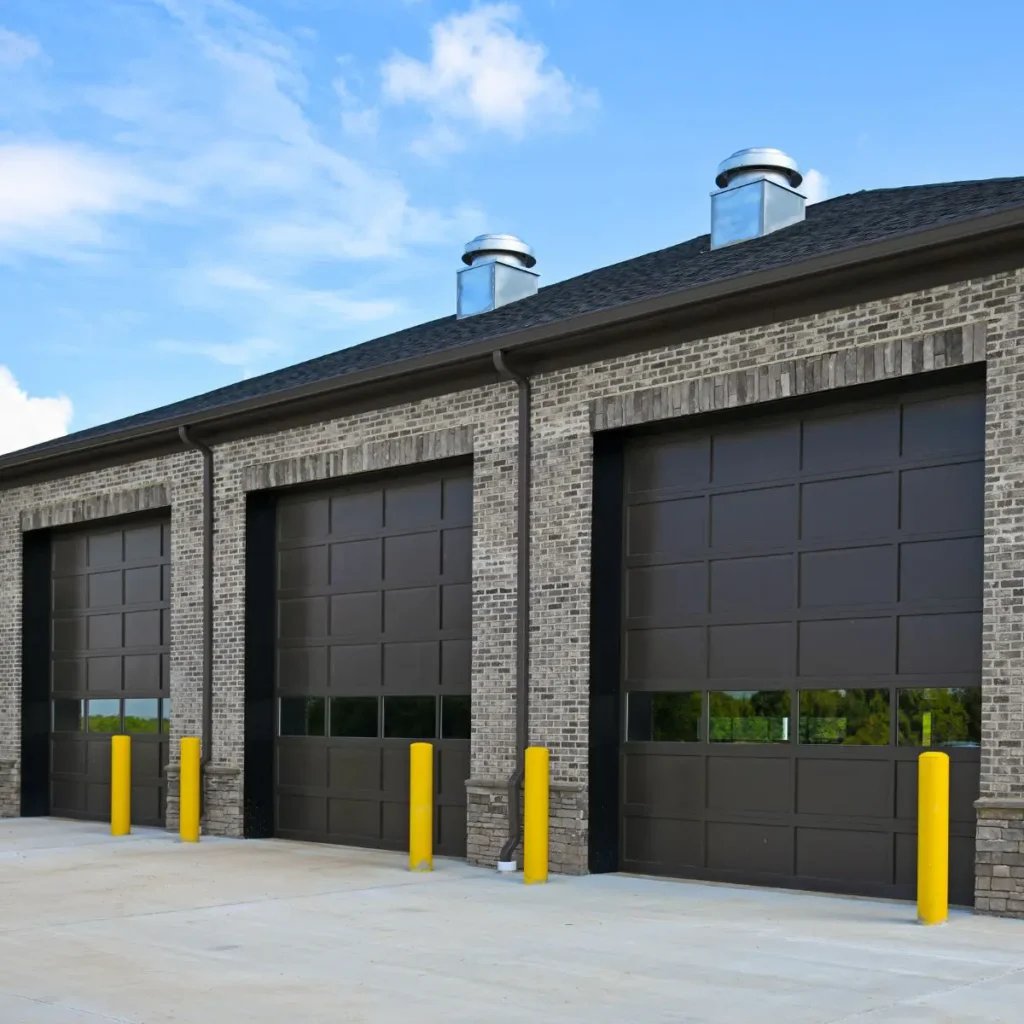
Two railroads cross in Cheyenne and both run yards here, and the Union Pacific yard includes a roundhouse that supports its steam program. That is a useful picture of what a maintenance shop is: a building where large, heavy, dirty equipment comes in under its own power or on a hook, gets worked on, and goes back out on schedule.
We build maintenance shops and service bays for plants in metals and heavy industry, utilities, contractors, haulers and equipment owners. Typical features are overhead cranes or hoist beams, drive-through bays, pits and trench drains, welding and fabrication areas, parts storage, wash bays, tool cribs and a small office with locker space. The building is simple. The details are not.
What separates a good shop from a bad one is flow and clearance. Can the biggest machine you own turn inside the door? Can you lift its heaviest component without moving another one? Does exhaust leave the building, or does it sit at the ceiling? We answer those questions with a layout that begins at the largest vehicle and works outward, and we build to it with steel, concrete and enclosure in one package. Where the program needs a bridge crane, the structure follows the rules we use for high-bay crane-ready buildings. Where space is tight beside the rail corridor, as it is around the depot district, we compact the layout and stack the functions.
Start with the biggest thing you service
We ask for the dimensions, weight and turning radius of the largest machine, and for the lift points of its heaviest component. That sets door height and width, clear height under the crane hook, bay depth, column spacing and floor thickness. We then put the daily-use machines in the central bays, and the rare heavy ones in the bay with the crane.
Next we lay out flows: parts in, waste out, vehicles in and out, people through. We keep the welding area away from the parts room, put the wash bay near the door, and give the chemical storage its own ventilated room. We draw this out and walk it with your shop lead before steel is ordered, because changes are cheap on paper and expensive in a slab.
Shops by owner type
Plant maintenance shops sit inside or beside manufacturing plants and handle machine rebuilds, welding and fabrication. Equipment and construction contractors need open-bay shops with a yard. Rail and utility operators need longer bays, track-level access and heavy lifting. The Cheyenne Air National Guard Base occupies about 77 leased acres at the regional airport and hosts a C-130H airlift wing, which illustrates how specialized maintenance space can get next to Cheyenne Regional Airport.
Sometimes the best answer is an aircraft hangar-style clear span; sometimes it is a plain steel shop with a crane runway. We build both, and we tell you when a pre-engineered metal building will do the job at lower cost.
What goes into the building
Foundations and slabs come first. Bay floors are reinforced and thick enough for point loads from jacks and stands, with a hardened or sealed surface that stands up to oil and abrasion. Trench drains run to oil and sand separators, and pits get waterproofing and guard rails. Crane runway columns have their own footings, sized for the crane's wheel loads and for the dynamic factor in the design.
Above the slab, we erect the steel frame and enclosure, insulated overhead doors, windows and daylighting. We install ventilation and exhaust capture, radiant or unit heating, compressed air, lighting and power. Where the program calls for it, we add a mezzanine for storage or controls, built as part of the structure; the principles are the same as in our mezzanines, catwalks and platforms work.
Wind, snow and cold on a big-door building
A shop is mostly doors, and doors are the weak point in a gale. Laramie County lists a 105 mph design wind speed, so we specify wind-rated sectional or bi-fold doors with reinforced tracks and heavy jamb connections. Bays are often arranged with doors on the leeward side where the site allows it, and entries get wind breaks.
Heat is the other issue. Opening a big door in January dumps the building's warmth in minutes. Radiant slab heat or tube heaters bring recovery time down, and insulated, fast-acting doors keep it from happening in the first place. The county's 32 lb/ft2 ground snow load and 36 inch frost depth set roof and footing design, and we add drift allowances on low roofs and canopies.
Building while the shop keeps working
Most owners cannot stop servicing equipment during construction. If a shop is being replaced, we build the new one beside the old and move over in a weekend. If it is being expanded, we protect the working bays with temporary walls, route traffic around the site and schedule noisy work around shifts. Cranes and hoists are load tested and certified before use.
Long-lead items include crane systems, overhead doors and heating equipment. We order them early and confirm delivery dates before the slab is poured, since crane runway columns and embedded plates must be set accurately. The result is a shop that commissions in a few days, not weeks.
Draw it around your largest machine
Send us the equipment list and the site. We will return a shop layout, a budget range and a build sequence.
Common Questions
How tall should a maintenance bay be?
Height is set by the tallest vehicle with its door open, plus the crane or hoist clearance and the lift height of the heaviest component. We measure those, add allowance for growth, and size the door and eave height to suit. Extra height costs less when planned at the start.
Do I need a crane in the shop?
Not always. A hoist beam or portable gantry may be enough. If you regularly lift engines, motors or drive components, an overhead crane saves time and risk. We price a runway and crane separately so the choice is clear.
How do you handle oil, fluids and washdown?
Trench drains collect washdown water and route it through oil and sand separators, with spill containment at fluid storage. Wash bays get their own drains and recycling where useful. The local jurisdiction reviews the plan, and we coordinate with them.
Can a shop be built on a rail-adjacent site?
Yes. Rail-served land is limited here: the Cheyenne Logistics Hub is the only rail-served business park the economic development agency lists in the city. We coordinate with the railroad on spur, clearance and crossing details when a track is part of the shop.
What heating works best for big doors?
Radiant slab heat or radiant tube heaters, with insulated doors. They recover quickly after a door opens and warm people and surfaces rather than air near the ceiling. We size heating to the door cycle, not just the floor area.
Related
Related Services
Related Building Types
Related Industries
Related Service Areas
Ready to talk about your project?
Industrial Construction Services
-
Ground-Up Industrial Construction
Ground-up plants and industrial buildings in Cheyenne and Laramie County, built around utilities, slab spec, wind load and a 36 inch frost line. -
Industrial Design-Build
One contract for design and construction of Cheyenne industrial plants, with guaranteed pricing, early utility release and closely managed site work. -
Industrial Preconstruction Services
Site feasibility, utility review, estimating and scheduling for Cheyenne industrial projects, priced on real quantities before design is frozen.