
Industrial Contractor in Cheyenne, Wyoming
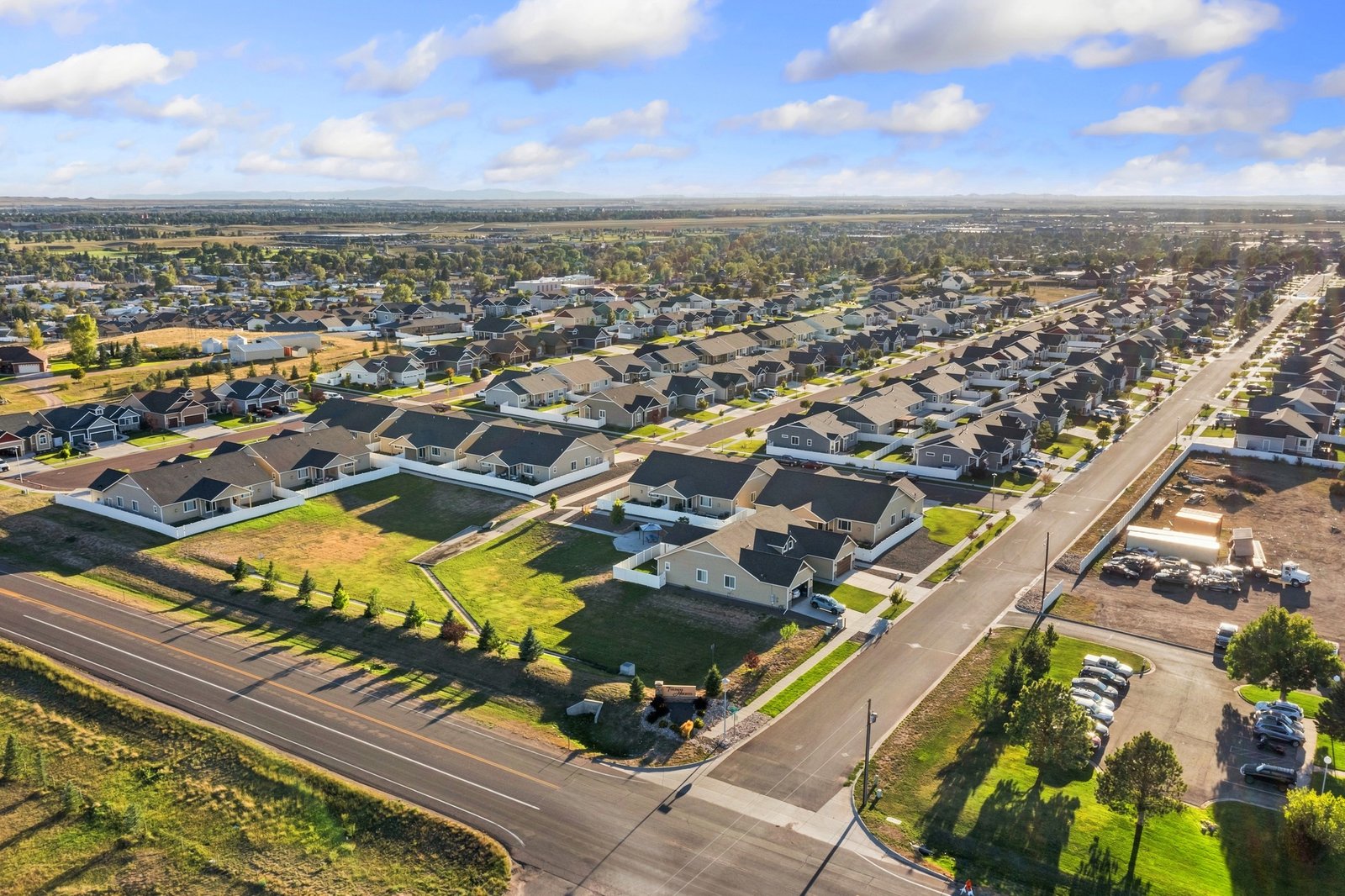
Owners building a plant or a data hall in Cheyenne start from three numbers in Laramie County's published design table: a 36 inch frost line, a 105 mph wind design speed and a 32 lb/ft2 ground snow load. Footings go below frost. Walls and roofs carry the wind. Every slab edge, joint and curb detail gets checked against all three. That table is the residential one, so commercial and industrial work runs through IBC Chapter 16 with the criteria shown on code study sheets. We bring the same discipline to the first site walk.
The metro gives industrial buyers what most markets cannot: interstates, rail and power in one place. I-25 meets I-80 southwest of the city, US 85 and US 87 feed the south and north, and Union Pacific and BNSF both run yards through town. That is the freight network we plan haul routes, delivery windows and truck courts around.
We are the contractor for plant managers, operations and engineering leads and corporate real estate teams. We build the shell, the slab, the equipment pads, the duct bank and the civil work under all of it. What follows is how that plays out across the Cheyenne market.
Capacity in the park inventory
Cheyenne Business Parkway is 900 acres inside city limits, with 60 acres still open in parcels under 15 acres, and its gas, electricity and redundant fiber are already in place. Small-parcel build-to-suit work at Cheyenne Business Parkway is truck-served and power-ready from day one. Further out, the Cheyenne Logistics Hub covers about 2,000 acres southwest of town with BNSF and Union Pacific access, a short-line operator, transloading and rail car storage.
The compute side is just as deliberate. The head of the local economic development agency said in April 2025 that data center companies have collectively invested $3.1 billion in Cheyenne from 2012 on. If you are sizing a campus, our data center industry work sets out how we sequence power, cooling pads and shell on a site like this. Land is not the constraint here. Utility capacity and construction sequence are.
What we build and pour
Ground-up plants and warehouse shells are the core. Our ground-up industrial construction covers grading, utilities, foundations, structure and envelope under one schedule. For compute, we build the support buildings, pad the generators and chillers, and run the underground electrical. The duct bank is usually the longest-lead path on the job, so we draw it first.
Slab is where industrial owners feel the quality. We place flat floors for racking, forklift aisles and heavy equipment, and we detail joints for the loads you will actually run. Equipment pads, dock aprons and truck courts follow the same logic: the base, the concrete and the drainage get designed together. We closely manage the concrete and civil scopes that decide how the building ages.
Codes and who holds your permit
Wyoming has no single statewide building code. Cities and counties adopt and enforce locally, so the first question on any parcel is which jurisdiction reviews it. The state adopted the 2024 International Codes on June 28, 2024. Laramie County adopted the 2024 International Building Code with amendments effective January 1, 2025 and the 2024 International Fire Code effective April 15, 2025.
The City of Cheyenne works on its own track. At the February 5, 2025 Board of Appeals meeting, the Chief Building Official reported that an adoption package was before the governing body and that the 2018 Energy Code would stay in effect. We confirm the current edition with the reviewing office before drawings are priced. Our permitting and entitlements coordination keeps that question from becoming a schedule surprise.
Wind, frost and a short pour season
At about 6,086 ft elevation, Cheyenne wind sets the rules for crane picks and panel lifts. Tilt-wall erection, steel and roofing all stop when gusts exceed what the rigging allows, so we carry weather days in the schedule instead of hoping. Our tilt-wall industrial buildings work plans lifts around the forecast and keeps the panel crew and crane booked tightly.
Frost drives the concrete calendar. Footings sit at least 36 inches down, subgrade has to be protected before it freezes and winter placements need blankets, heat and a plan for curing. Foundation work done early in the season buys the steel crew a dry deck. For slab-on-grade, industrial concrete floors are timed so they cure before racking and conveyor install.
Reach beyond the city limits
Our project teams work the whole county and the corridors that feed it. West on I-80, Laramie is about 50 miles out at a much higher elevation, so frost and snow numbers change. North on I-25, Wheatland sits about 65 miles away near a large coal-fired generating station. We price mobilization honestly and plan material hauls so long distances do not turn into idle days.
Inside the metro, the I-25 and I-80 junction is the hinge for freight, and we treat it that way when sequencing deliveries. If you are comparing sites, tell us the load, the power draw and the rail or truck mix, and we will tell you what the ground and the schedule will take.
Bring us the site, the load and the date
Send us the parcel, the power draw and your target occupancy. We will tell you what the ground, the permit path and the pour calendar will allow before you commit.
Common Questions
Which design values do we use for a Cheyenne industrial building?
Laramie County lists a 36 inch frost line, a 105 mph wind design speed and a 32 lb/ft2 ground snow load in its published residential table. Commercial and industrial design follows IBC Chapter 16, and the criteria are shown on code study sheets submitted with the permit. Your engineer of record confirms the final values for the parcel. We build the footing depth, the roof loads and the cladding attachments to those sheets.
Does the city or the county review my permit?
It depends on the parcel. Wyoming delegates enforcement to qualifying cities and counties, and Cheyenne and Laramie County each hold authority in their own areas. A parcel inside city limits goes to the city, and one in the county goes to the county. We confirm this first because the energy code edition can differ between them, and that changes envelope and mechanical design.
Can I get power and fiber to a site quickly?
In the established parks, the main utilities are already in place. Cheyenne Business Parkway lists high-volume natural gas, electricity and redundant fiber, and the Logistics Hub reports fiber, water, gas, electricity and sewer. In-park service is not the same as capacity for your load, so we ask the utility early for the service size and the energization date. Long-lead switchgear and transformers set the real schedule.
When does winter stop concrete work?
It does not stop it, but it changes cost and sequence. With a 36 inch frost line, we protect subgrade, heat enclosures and monitor concrete temperature through the cure. We also try to get footings and slab-on-grade placed before hard freeze. Some owners accept a winter premium to hold a date, and others move the pour to spring and work on steel in the meantime.
What should I decide before we start preconstruction?
Pick the parcel, the target load and the delivery method. Then settle the permit path and the long-lead items such as electrical gear and structural steel. Our preconstruction services turn those into a priced schedule. Once those are fixed, the site work and shell sequence follow with few surprises.
Related
Related Services
Related Industries
Related Service Areas
Ready to talk about your project?
Service Areas
-
Laramie
Light manufacturing, flex and metal buildings in Laramie at 7,165 ft. We plan frost, wind and long hauls into every pour and erection date. -
Wheatland
Equipment pads, heavy-haul roads and phased work beside an operating plant in Wheatland, Wyoming. We plan around outages and I-25 hauls. -
Cheyenne Business Parkway
Build-to-suit plants, distribution boxes and truck courts at Cheyenne Business Parkway.