
Data Center Construction in Cheyenne, Wyoming
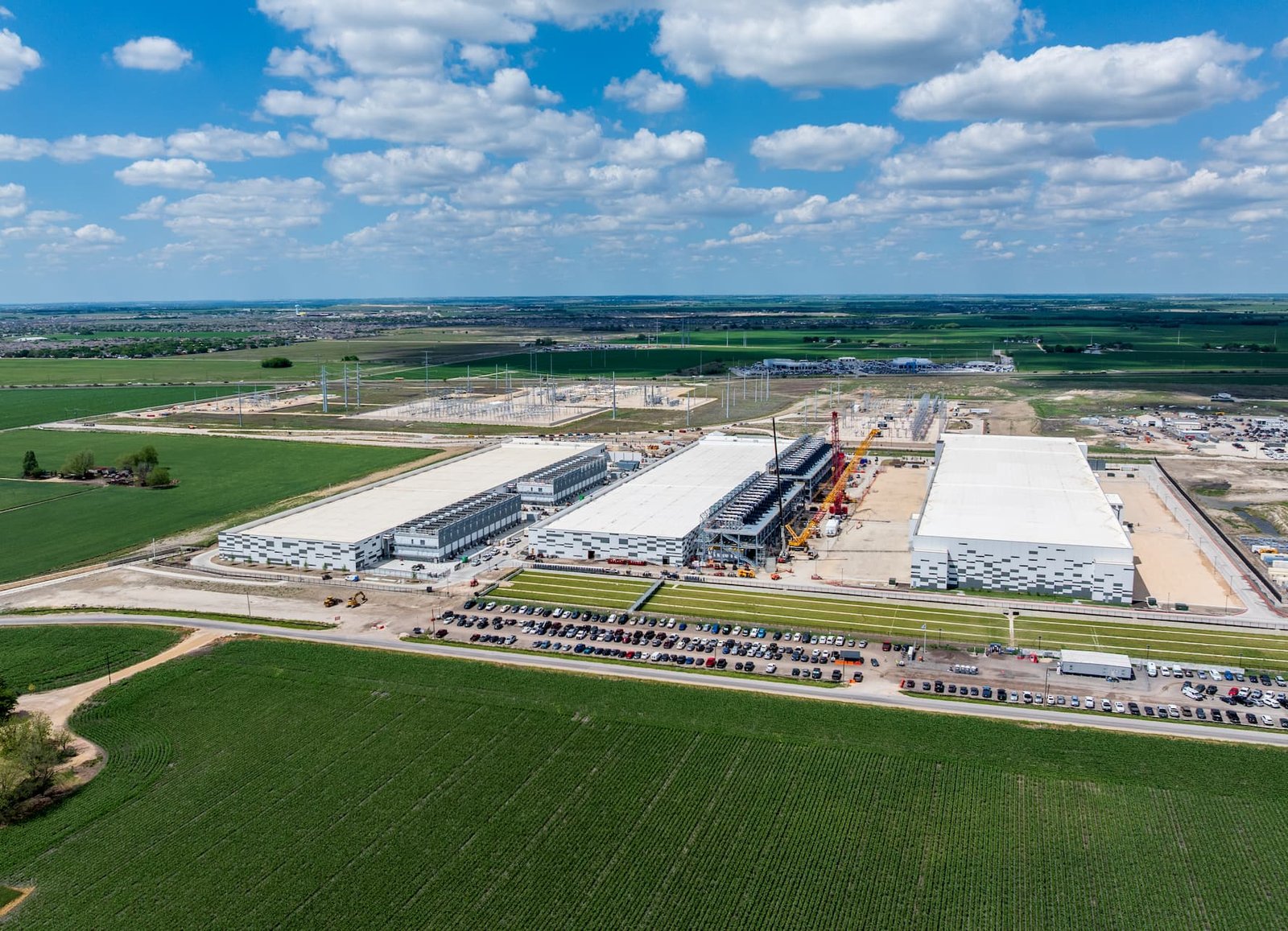
Construction of an $800 million, 715,000 square foot data center on 960 acres south of Cheyenne began in mid-spring 2024 in the High Plains Business Park, with opening scheduled for 2027. That one campus peaks at more than 1,000 skilled trade jobs, and it set the terms for everything built after it: power first, then cooling, then fiber, then the shell.
We build the pieces of a campus that sit under and around the data halls: the site, the utility corridors, foundations and slabs, structure and envelope, and the support buildings. Power and cooling systems are specified by your design engineer and installed by specialty trades under our coordination. Our job is to deliver a site and shell those systems drop into without surprises.
The capacity-minded way to read this market is through its constraints. Data center operators in Cheyenne have collectively invested $3.1 billion from 2012 to today, and the Chamber CEO expects electricity demand to rise about 50% over five years. Power, not land, sets the pace.
Why Data Center Land Keeps Moving Here
Three things recur in the local record. The I-80 corridor through Cheyenne runs along a major internet backbone that follows the Union Pacific right of way. Business parks arrive with utilities and fiber in place. And the city's first data center, built about 20 years ago north of a large distribution center near I-80 and I-25, went onto a business park funded with a state matching grant that a city study found returned $35.70 in tax revenue per public dollar.
The buyer mix has widened since. The record lists an IT services firm, a bank and a satellite broadcaster alongside the hyperscale campuses, and the mayor said two more data center companies were weighing significant investment. The Cheyenne data center corridor is therefore several projects of different sizes, not one.
Site, Slab and Shell for the Data Hall
A data hall slab carries rack rows, cooling distribution and often a raised floor or overhead tray system. The supercomputing center at North Range, funded by the National Science Foundation and the State of Wyoming, totals 153,000 square feet with 24,000 square feet of raised floor, a useful scale for what a purpose-built computing hall looks like here. We hold flatness, embed and penetration tolerances tight, because rack placement and underfloor air or piping depend on them.
Envelope choices run to tilt-wall panels for mass, security and fire rating, or insulated metal panels over steel for speed. Generator yards, electrical rooms, security and loading are a scope of their own, which we deliver under our data center support buildings package so they are ready when the main hall energizes.
Power Studies, Code Edition and Review Path
Laramie County adopted the 2024 International Building Code with amendments effective January 1, 2025, and the 2024 International Fire Code effective April 15, 2025. The state's electrical authority names the 2026 National Electrical Code while other sources still cite 2023. For a data center the electrical edition and the fire protection approach, including pre-action or clean-agent systems, are settled with the reviewer before the shell is final.
Utility interconnection is its own permit track: load studies, transmission upgrades and service agreements come before construction power. The High Plains Business Park work shows the civil side, with two sanitary sewer mains, a water main, a new 4.5-mile road and a highway signal delivered in seven bid packages. We plan for that kind of off-site public work whenever a campus parcel needs it.
Long-Lead Gear Drives the Date
Data center schedules are set by equipment: transformers, switchgear, generators and cooling plant. Their lead times exceed the shell by a wide margin, so procurement starts as soon as the electrical one-line is stable. Our long-lead procurement management tracks every item against the date the hall must be ready to energize.
Labor adds constraint. The large campus drew a peak above 1,000 skilled trade jobs, and the Sentinel missile modernization at F.E. Warren was projected to bring $2.6 billion in construction spending with work expected to begin in 2027. Skilled trades will be contested, so we lock commitments for key trades early and sequence work to avoid stacking crews.
Closed-System Cooling and Water Discipline
Cooling decides the site plan. The large local campus agreed to use no more water than a standard business with 100 employees and plans closed-system cooling, and neighbors raised noise and traffic concerns at announcement. Those are the conditions every Cheyenne data center now works under: limited water, audible equipment and truck traffic. We place cooling yards away from neighbors, plan haul routes early and treat noise as a design limit.
Turnover is staged. Each power and cooling system is tested, documented and brought live in sequence, through our commissioning and turnover process, so your operations team receives drawings, test records and warranties as one organized set.
Energized Work and Heavy Lifts
Data center sites combine heavy lifts, deep excavations for duct banks and, late in the job, energized equipment. We run lockout and tag procedures for every tie-in, restrict access to live areas and review lift plans for generators and transformers before delivery. Wind limits crane work at this elevation, so wind holds are scheduled as part of the lift plan.
Security is part of safety. Fencing, badging and camera coverage begin at mobilization, not turnover, because a campus under construction holds valuable equipment on open ground.
Related Work on a Campus Site
Where a project is a full ground-up campus we scope it under data center construction, and where an owner wants a lighter shell for staging or spares, a pre-engineered metal building is often the right tool.
Between the substation and the data hall run duct banks, manholes and fiber vaults. That work runs ahead of the building and sets its own schedule, so we sequence it first and protect it with spare conduit for the next phase.
Start With Your Load and Your Parcel
Send us your target megawatts, hall layout and a preferred park, and we will return a site and shell scope with the long-lead items identified. Use the contact form to begin.
Common Questions
How much does the schedule depend on utility power?
Almost entirely. The shell can finish well before the utility can deliver service, and the Chamber CEO has flagged power supply and transmission as challenges while expecting demand to rise about 50% over five years. We open the service request at the start, track substation and transformer delivery, and sequence the hall so it is ready the week power arrives.
Is closed-system cooling the norm in Cheyenne?
The large campus south of town plans closed-system cooling and agreed to a water use no higher than a standard 100-employee business. Water supply is also a council-level question for other large industrial proposals. We assume limited water as the base case and design cooling plant, yards and drainage accordingly.
Where does fiber come from?
The I-80 corridor through Cheyenne follows an internet backbone along the Union Pacific right of way, and business parks such as the Cheyenne Business Parkway report redundant fiber in place. We route fiber vaults and conduit with the duct bank so diverse paths enter the site from different sides.
Can you build a smaller colocation or edge facility?
Yes. A smaller facility keeps the same priorities, power, cooling and security, at a size where a tilt-wall or metal-panel shell on a few acres is enough. We scope it with the same long-lead tracking and staged commissioning as a campus, just with fewer moving parts.
Related
Related Services
Related Building Types
Related Industries
Related Service Areas
Ready to talk about your project?
Building Types
-
Warehouses
Warehouse shells built to Cheyenne frost, wind and snow loads: slab, wall system, roof and dock package for the Business Parkway and Logistics Hub. -
Distribution Centers
Distribution centers in Cheyenne built from throughput backward: slab flatness, dock count, truck court and power, with North Range and I-80 access in mind. -
Manufacturing Plants
Ground-up manufacturing plants in Cheyenne built around the process: equipment pads, crane bays, process utilities and power, frost depth and permits.