
Industrial Construction in the Cheyenne Data Center Corridor
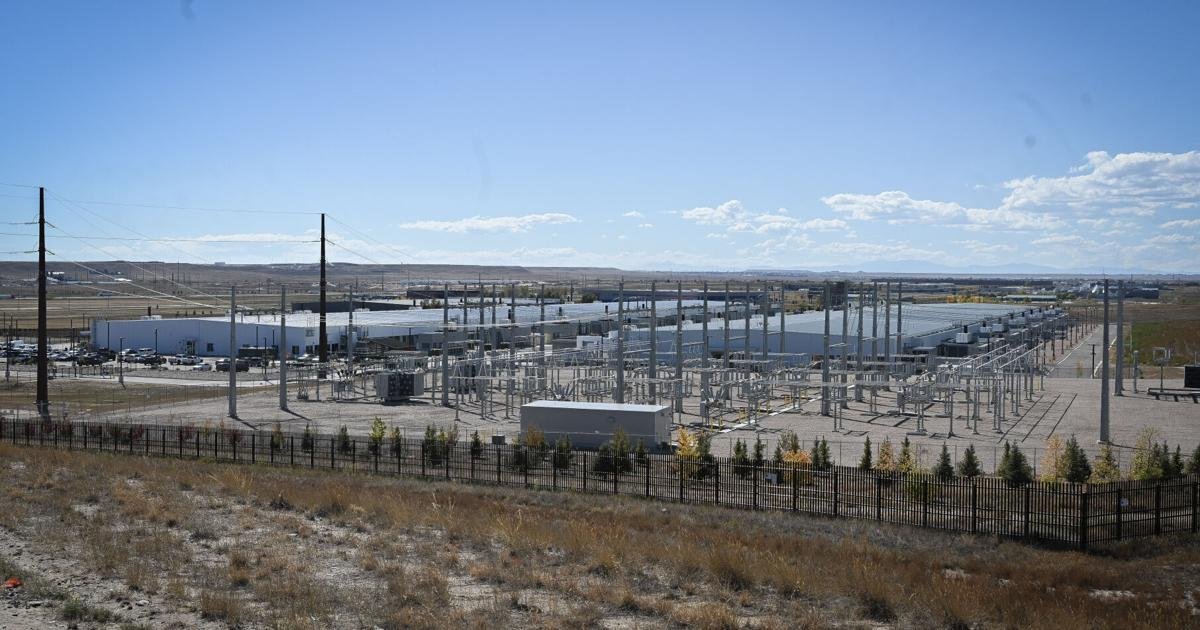
Data center owners need three things from a builder in Cheyenne: megawatts on a known date, a slab that carries rack and cooling load, and a clean path to fiber. We build the shell, the electrical yard, the underground and the support buildings that sit between those three. The work concentrates around the I-25 and I-80 interchange, where the interstate runs along a major internet backbone that follows the Union Pacific right of way. That backbone is the reason operators look at this ground first.
Power is the pacing item. The Cheyenne Chamber CEO expects electricity demand to rise about 50% over five years, and the same reporting lists power supply, transmission, housing and workforce as open challenges. We plan with that in view. Utility interconnect dates drive our schedules, and we ask for them before we ask for a site plan. Our data center construction work covers the full run from earthwork to energization, and the data center industry page lays out how we organize crews and procurement for it.
Interconnect date first, footprint second
We start from the utility, not the building. Before a footprint is drawn we want the interconnect date, the service voltage, the transformer lead time and the route the feeders take to the site. Those four items set the critical path. The slab, the shell and the mechanical yard get sequenced around them. Our preconstruction services put those dates on one sheet beside the earthwork window, so the owner sees where float exists and where it does not.
Cooling is the second question. Chiller pads, dry coolers, fuel storage and water-side equipment each need a foundation and containment of their own. We pour equipment pads and foundations to the vendor's tolerance and set embeds before the steel is tied. A pad that misses flatness becomes a commissioning problem six months later, so every pad is surveyed before the equipment set is released.
A business park that returned $35.70 per public dollar
The market's first big data center went up about 20 years ago, just north of a large distribution center near I-80 and I-25 (the same freight geography as our Cheyenne logistics hub work), on a business park built with a Wyoming Business Council matching grant. A city study found that park returned $35.70 in tax revenue per public dollar. For an owner weighing sites, that record says the pattern is proven here: public money goes into roads, utilities and lots, and private capital builds on top.
Other named investments include a bank and a satellite television network, and the mayor said two more data center companies were considering significant investment (Cowboy State Daily, April 2025). Treat that as interest, not commitment. We price what is signed and carry the rest as options, which keeps your number honest when neighbors announce and then slip.
Wind, frost and the ground the cables cross
Wind is a design input here. Laramie County's published residential design table lists a 32 lb/ft2 ground snow load, a 105 mph wind design speed and a 36 inch frost line. Commercial structures follow IBC Chapter 16, and their values sit on the code study sheet. Rooftop dry coolers and air handlers see that wind, so curbs, screens and tie-downs are engineered, not field-fit. Footings go below frost, and exterior gear on unheated ground gets frost protection or isolation from the building slab.
Fiber and power cross the site before the building does. We trench, encase and mark them first, because digging a duct bank out from under a finished slab costs weeks. Separation between power and communications, spare conduits and pull-box locations get settled with the design team in preconstruction, and our site utilities package carries them into the field in one pass.
Which code, and who enforces it
Laramie County adopted the 2024 International Building Code with amendments effective January 1, 2025, and the 2024 International Fire Code effective April 15, 2025. The county's published page does not confirm the City of Cheyenne's own adoption date, so we confirm which jurisdiction governs a parcel before drawings are priced. The International Code Council notes Wyoming has no single statewide building code. Adoption and enforcement are local, and requirements vary by jurisdiction.
Electrical is its own track. The state fire marshal's page names the 2026 National Electrical Code for electrical work, while other Wyoming sources still cite the 2023 edition. On a facility where electrical is most of the contract, we get the edition in writing from the department before design is frozen. Our permitting and entitlements coordination tracks that answer alongside plan review.
Long-lead gear sets the calendar
Switchgear, generators, transformers and chillers are ordered in months, not weeks, so their purchase orders go in before the earthwork bid is settled. We release long-lead orders on owner approval, track fabrication and shipping weekly, and hold a receiving plan with laydown space on site. Our approach to long-lead procurement management keeps a late transformer from idling a finished hall.
Winter is a line item. Concrete placed in January needs blankets, heated enclosures and a wind plan. We price winter protection and put it on the schedule, so a freeze does not turn into a claim. Energization is staged: we hand over power and cooling in blocks, so the first hall can commission while the next is still under construction.
Cost follows megawatts, not square feet
On a data hall the electrical and mechanical yards often outweigh the shell. Three items move the number: feeder length and duct bank quantity, the count of cooling pads and their redundancy, and the owner-furnished equipment schedule. Square footage barely moves it. We carry those as separate allowances in the estimate, so a change in one does not hide inside the others.
Generation matters too. A planned $1.2 billion solar project with 1.2 million panels near Cheyenne could supply a data center, according to July 2024 reporting. Owners weighing on-site or contracted supply should reserve land for it in the master plan. We lay out phase one so that phase two does not cut through it, and our phased-construction practice on occupied sites applies when a live hall sits next to a new one.
Send us the interconnect date
Give us the parcel, the megawatt target and the utility timeline, and we will return a sequenced budget and the long-lead list that sets your energization date.
Common Questions
How early should we involve a builder when power is the constraint?
Before you buy or option the land. Interconnect studies, transformer lead times and feeder routes decide whether a parcel works, and a builder can price the underground and the electrical yard against each candidate site in a few weeks. That comparison costs far less than discovering a long feeder run after closing.
Can you build next to a live data hall?
Yes, with a separate access route, dust and vibration limits, and a written cutover plan for every shared utility. We schedule tie-ins in agreed windows and do not touch live feeders without the operator's lockout approval. Slab saw-cutting and heavy compaction near live equipment are scheduled and monitored.
What does the frost line mean for exterior cooling pads?
Laramie County lists a 36 inch frost line in its published design table. Pads that carry chillers or dry coolers either go below that depth, sit on engineered insulated sections, or are isolated so heave cannot rack piping. The right choice depends on equipment weight and the vendor's allowable movement.
Do you need to know the tenant before you can price?
Not to start. We price the shell, the site and the underground from a basis of design, then carry the electrical and cooling scope as allowances against vendor data. Final numbers firm up as equipment selections arrive, and we show the allowance and the change in the same format.
Related
Related Services
Related Industries
Related Service Areas
Ready to talk about your project?
Service Areas
-
Cheyenne
Ground-up plants, data center support, slabs, pads and site civil for Cheyenne owners. We build to local frost, wind and snow criteria. -
Laramie
Light manufacturing, flex and metal buildings in Laramie at 7,165 ft. We plan frost, wind and long hauls into every pour and erection date. -
Wheatland
Equipment pads, heavy-haul roads and phased work beside an operating plant in Wheatland, Wyoming. We plan around outages and I-25 hauls.