
Equipment Pads and Foundations for Cheyenne Plants
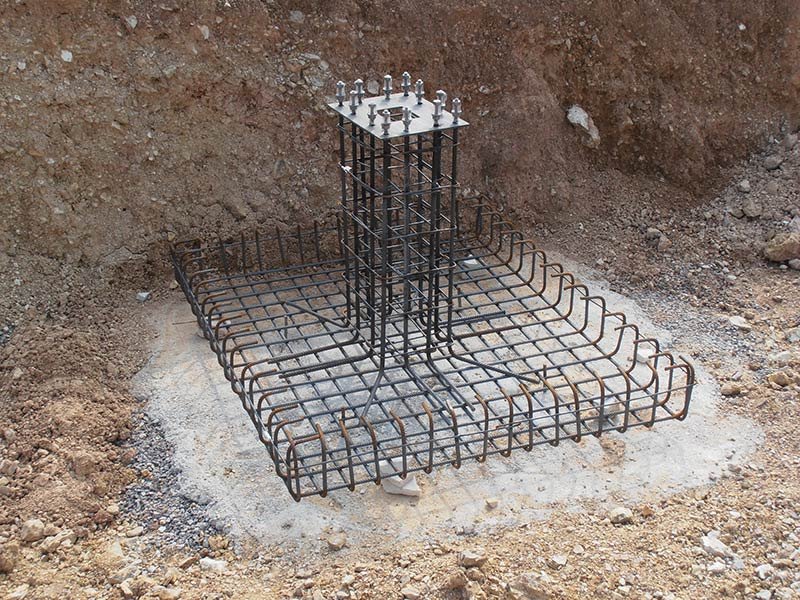
Chillers, generators and switchgear weigh more than the room around them, and they sit on concrete that has to stay level for the life of the plant. An equipment pad that settles a quarter inch can bind a chiller, crack a bus duct or pull a generator off its fuel line. We build equipment pads and machine foundations for industrial, data center and utility-scale loads in Cheyenne and Laramie County, and we treat each one as a small structure with its own soils, loads and tolerances.
The range is wide, and it sits next to the slab work covered under industrial floors. A pad-mounted transformer needs a modest slab with a cable pit. A generator set needs a pad sized for its weight, vibration and fuel containment. A chiller yard needs a field of pads with drains, and a press or a rolling mill needs a foundation block with isolation and a tolerance measured in thousandths. In every case, the pad is the hand-off point between the civil work and the mechanical or electrical trade, and our job is to put it exactly where the equipment drawings say.
The prairie adds its own conditions. Frost reaches 36 inches in the county design table, wind loads on tall equipment are high, and a pad that looks fine on a dry July day can move during the thaw if the subgrade is wrong.
Cooling and power are the heavy loads here
Cheyenne's newest large projects are built around power and cooling. The 715,000 square foot data center campus in the High Plains Business Park plans closed-system cooling, and its developer agreed to use no more water than a standard business with 100 employees. A closed system means a lot of chillers, dry coolers and pumps outdoors, and every one of them sits on a pad. The supercomputing center at North Range, with 24,000 square feet of raised floor, tells the same story from the other side: the equipment is the building.
Demand is not going away. The chamber's CEO expects electricity demand to rise about 50% over five years, and the same article names power supply and transmission as challenges. For a data center owner, that means more transformers, more switchgear and more generators, usually in phases. We lay out pad fields with room to add, so the second and third phases do not require demolition of the first.
Pads, blocks and the details in between
Our work includes the excavation, structural fill, forming, reinforcement, embedded plates and conduit sleeves, anchor bolts and rods set to template, concrete placement, and grouting. For rotating equipment, we build isolated inertia blocks with spring or pad mounts. For generators, we pour a pad with a curb or a containment basin sized for the fuel tank. Where a deep block or a tall base is needed, we pair the work with deep foundations. For transformer and switchgear pads, we cast openings and cable trenches to match the electrical drawings.
Tolerance control is where this work differs from ordinary flatwork. Anchor bolt projection and location, pad flatness, elevation and the position of embedded items are surveyed against the equipment vendor's drawings before and after the pour. We hold a template for anchor bolts and verify it in the field, since a bolt out of position by half an inch can mean a vendor change order and a delay.
Bearing, frost and settlement
We begin with the geotechnical report and the vendor's weight and bearing requirements. Soft soil is over-excavated and replaced with compacted structural fill, and the pad is sized so that bearing pressure stays below the allowable value. Where frost could heave a pad, we either found it below the frost line, which the county table puts at 36 inches, or place it on non-frost-susceptible fill with insulation and drainage.
Drainage around the pad matters as much as the pad. Standing water at the edge saturates the soil, freezes in winter and undermines the slab. We slope the surface away, set a perimeter drain where needed, and keep roof or equipment condensate off the soil. After the pour, we monitor elevation points at intervals during early loading, and we give the commissioning team a benchmark record, so any later movement can be measured against it.
Who these pads serve
The biggest users of this work are data centers, which need pad fields for chillers, generators and electrical gear; utilities and power projects, including substations and generation support; and advanced manufacturing, where machines need isolated foundations, and a data center hall can have hundreds of pads on a single parcel. Metals and heavy industry bring the heaviest blocks and the tightest tolerances.
Smaller owners also benefit. A distribution operation adding a battery charging room, a compressed air system or a rooftop-to-grade unit swap needs a small, well-made pad more than a big slab. We take those jobs too, and we do them with the same survey control and templates.
What changes the price
Pad price follows weight, size and tolerance. Isolated blocks with spring mounts cost more than simple slabs. Poor soil adds over-excavation and fill. Lead time on the equipment itself is the schedule risk: if the vendor's drawings arrive late, we cannot set bolts or embeds, and a pad poured without them gets drilled and epoxied later at higher cost and lower confidence.
We keep price down by grouping pads where the equipment allows it, using standard section designs where the loads permit, and pouring several pads in one mobilization. We also push for early release of the final vendor drawings and tie our pour dates to them, using the procurement log to track what is on hand and what is late.
Send the equipment list and weights
Give us the vendor drawings or the schedule with weights. We will return a pad layout, bearing review and price.
Common Questions
How tight is the tolerance on an equipment pad?
It depends on the equipment. Chiller and generator pads usually need a flat and level surface within a fraction of an inch across the footprint. Precision machines and rotating equipment can require much tighter tolerances. We work from the vendor drawings and survey before and after the pour.
Can you pour pads before the equipment is approved?
We can pour pad slabs, but we advise holding anchor bolts, embeds and final dimensions until the vendor drawings are approved. Pouring early and drilling later costs more and weakens the connection.
How do frost and wind affect pads here?
Frost can heave a shallow pad, so we found pads below the frost line or place them on non-frost-susceptible fill. Wind loads on tall equipment and overturning must be checked by the engineer, and we install the anchorage as designed.
Do you build containment for generator fuel?
Yes. We pour curbed pads or containment basins sized to the tank volume and the fire code, with sumps and drains arranged for inspection.
Can we plan for expansion?
Yes, and we recommend it. We leave space, stub conduits and size the electrical trenches for the next phase, so adding equipment does not tear up the first.
Related
Related Services
Related Building Types
Related Industries
Related Service Areas
Ready to talk about your project?
Industrial Construction Services
-
Ground-Up Industrial Construction
Ground-up plants and industrial buildings in Cheyenne and Laramie County, built around utilities, slab spec, wind load and a 36 inch frost line. -
Industrial Design-Build
One contract for design and construction of Cheyenne industrial plants, with guaranteed pricing, early utility release and closely managed site work. -
Industrial Preconstruction Services
Site feasibility, utility review, estimating and scheduling for Cheyenne industrial projects, priced on real quantities before design is frozen.