
Demolition and Slab Replacement in Cheyenne, Wyoming
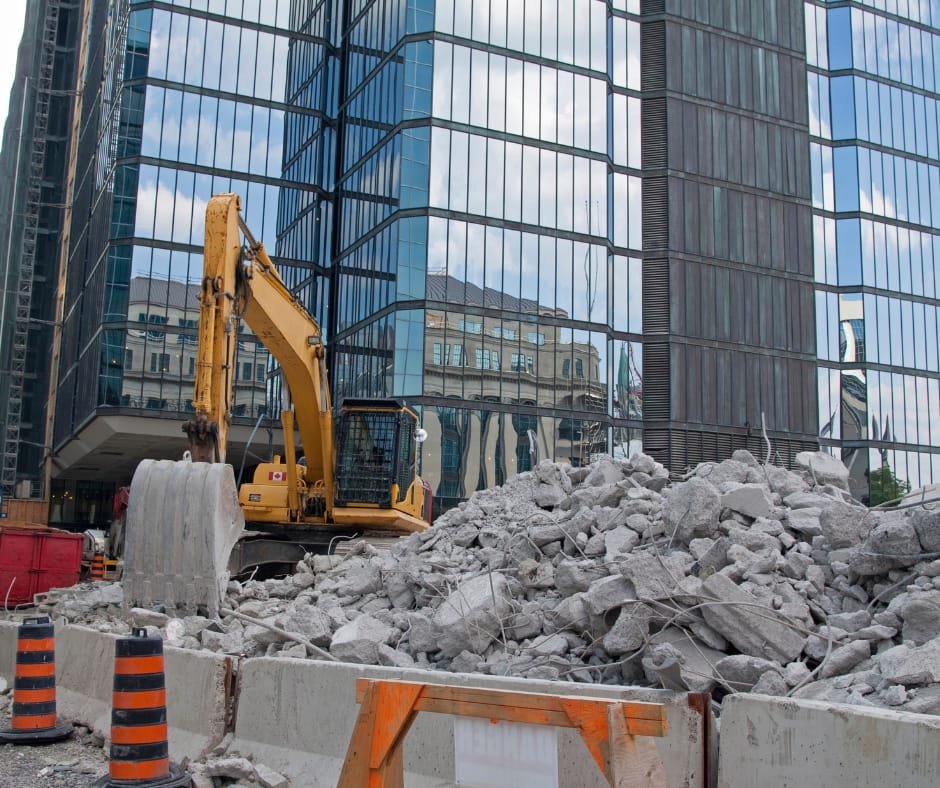
Asbestos abatement came first at the Hitching Post Inn site, and demolition was expected to take about two months after it. The order is the lesson. What is under and inside a slab or structure decides how it can come out, and a demolition plan written before that is known is a guess.
We remove and replace industrial slabs: cracked and curled warehouse floors, failed dock aprons, trench and pit areas, equipment foundations, and whole floors that no longer carry the loads now on them. The scope covers survey and testing, saw-cutting, breakout and haul-off, subgrade repair, vapor barrier, reinforcing, dowelled joints, placement, finishing, curing and joint sealing.
Most of this work happens inside buildings that are still operating. That changes the job from a concrete problem to a logistics problem. Dust, noise, vibration, truck access, wash water and the loss of floor space all have to be managed in the same plan. We schedule demolition in bays, keep clean zones open for product, and hand floors back on dates you can plan around.
Hazards under and in the concrete
Before a saw touches a slab, we scan for rebar, post-tension tendons, conduit and utilities, and we review as-builts for buried lines. Cutting a tendon or a live conduit is an injury risk and a shutdown. Where drawings are thin, we pothole and hand-dig. Silica dust control is mandatory: wet cutting, vacuum-equipped tools and respirators where needed, with air monitoring when the work is enclosed.
Older buildings add material risks. Floor coverings, mastics, pipe wrap and roofing can contain asbestos, and the Hitching Post site shows how the city expected the abatement to precede demolition. We require a hazardous-materials survey before work in older buildings and coordinate licensed abatement when it is needed. Heavy breakers also shake adjacent equipment, so we set vibration limits next to sensitive machines.
What replacement involves
Removal starts with a saw-cut grid sized so each piece can be lifted or broken and hauled. Subgrade is then inspected and repaired. Soft spots are excavated and replaced with compacted base, and voids from failed drains or settlement are filled. Fine-grained prairie soil loses strength when wet and heaves when frozen, so we pay attention to drainage under the slab as well as the slab itself.
The new slab is designed for what it carries now. We select the thickness, reinforcing and joint pattern to the forklift, rack and machine loads, add dowels or load-transfer devices at joints, and specify a flatness target if aisles need it. Where a floor was cracking because of curling or poor joint spacing, we correct the design, not just the damage. The same crews place new industrial concrete floors for larger programs.
Bay by bay, with a hand-off for each
We divide the floor into zones, usually a bay or two at a time, and finish each before starting the next. Zone one is cut, removed, repaired, placed and cured while operations continue in the rest of the building. A barrier, a dust control plan and a defined route for trucks separate the work area from the live area. Concrete trucks and pump lines get a dedicated entrance when the layout allows it.
Each zone ends with a handover: cure time confirmed by break tests, joints sawn and sealed, and surface checked for flatness. Where an owner needs the floor back quickly, we use high-early-strength mixes and accelerators in controlled conditions. We tell you the earliest date for light traffic and the date for full rack and forklift loading, and those dates are not the same.
Cold, cure and calendar
Placing concrete below freezing without protection ruins it. In Cheyenne, with a 36 inch frost line in the county design table, we plan pours indoors, under heat, or in the warmer months, and we protect subgrade from freezing before the placement. Cold slows strength gain, so winter cure times extend and we adjust handover dates. Hot, dry wind is the opposite risk in summer, which can dry a surface faster than it can set, so we use evaporation retarders and windbreaks.
Demolition and replacement can be planned around shutdowns. If your plant takes a week off at year end, we stage equipment, saw-cut early and pour in that window. If you cannot shut down, we run overnight or weekend shifts in zones. Either way, we schedule trucks, pumps and crews backward from the date the floor has to carry load.
What changes the price
Slab thickness, area, reinforcement, subgrade repair and access drive cost. Hidden conditions are the swing factor, which is why we scan, core and probe before we price. Haul-off and disposal follow volume, and concrete with embedded steel costs more to process. Night and weekend work add labor cost, but they can save lost production.
Think in life-cycle terms. A cheap patch to a slab that curls at the joints returns in two years. A properly dowelled and jointed replacement pays back in fewer forklift repairs and fewer damaged goods. We price a patch option and a replacement option side by side when the choice is real, and we say which one we would choose. Our industrial demolition services cover larger structural removals.
Work connected to slab replacement
Slab replacement often rides with equipment pads and foundations, new trench drains and, for cold-chain owners, a freezer floor. It can also be the first phase of an industrial renovation, where the floor is rebuilt before racking and process lines go in.
Industries where it comes up most are food and beverage plants with washdown and chemical attack on floors, and distribution buildings where rack loads have outgrown the original slab. Use the warehouse building and food processing pages for the building-level view.
Get the slab scanned and priced
Send us the area and what you run on it. We will scan, core and test, then give you a bay-by-bay plan and a date for each handback.
Common Questions
Can you replace part of a slab while the rest of the plant runs?
Yes. We work in zones with barriers and dust control and finish each before moving on. Operations continue in the rest of the building, with a defined truck route and clean access to the live area.
How long before forklifts can drive on the new slab?
It depends on the mix, thickness and weather. High-early mixes can allow light traffic in a few days; full rack and heavy forklift loads wait longer. We confirm with break tests and give you two dates, one for light and one for full load.
Why did my slab crack and curl?
Common causes are poor joint spacing, a thin section, an unprepared subgrade, drying shrinkage and heavy loads. Cheyenne's dry wind and cold swings add stress. We find the cause before replacing, or the new floor fails the same way.
What do I do about asbestos in an old floor?
Test before cutting. Floor tile, mastic and wrap on pipes can contain it in older buildings. A licensed abatement contractor removes it first, as the city expected with the Hitching Post redevelopment, and then demolition proceeds.
Do I need a permit for slab removal?
Often yes, particularly if structure, utilities or fire protection are touched. Laramie County adopted the 2024 International Codes effective January 1, 2025. We check with the local building department and file what is required.
Related
Related Services
Related Building Types
Related Industries
Ready to talk about your project?
Industrial Construction Services
-
Ground-Up Industrial Construction
Ground-up plants and industrial buildings in Cheyenne and Laramie County, built around utilities, slab spec, wind load and a 36 inch frost line. -
Industrial Design-Build
One contract for design and construction of Cheyenne industrial plants, with guaranteed pricing, early utility release and closely managed site work. -
Industrial Preconstruction Services
Site feasibility, utility review, estimating and scheduling for Cheyenne industrial projects, priced on real quantities before design is frozen.