Structural Steel Erection in Cheyenne, Wyoming
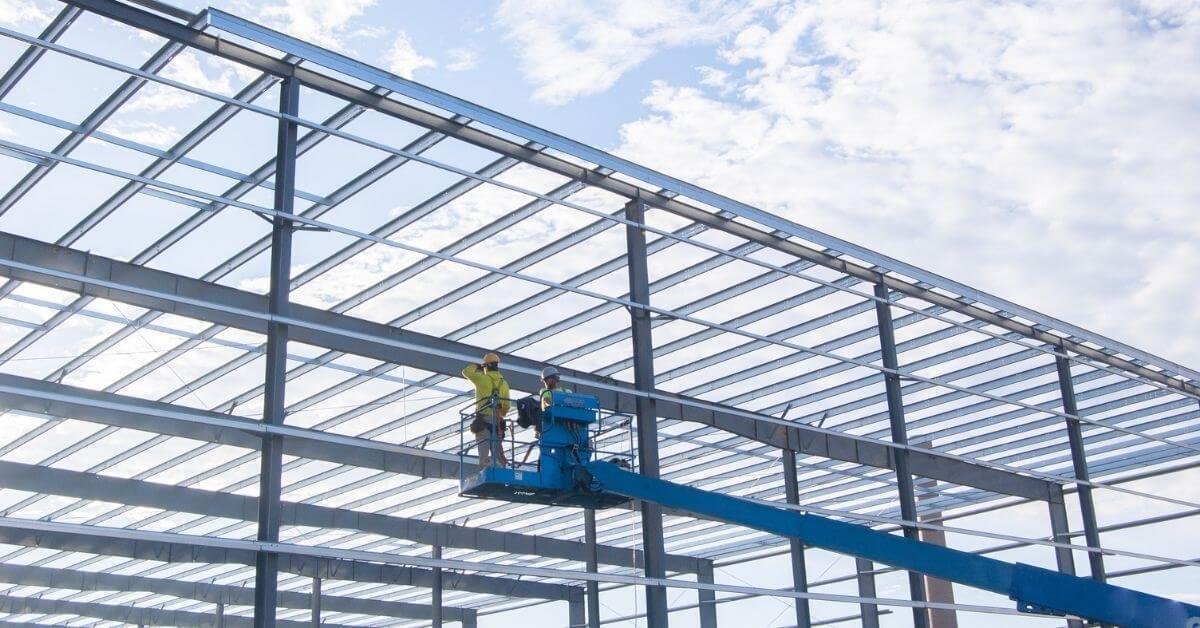
Steel reaches Cheyenne by rail and by interstate, and the Logistics Hub's listing mentions transloading and railcar storage on site, which matters when a frame is hundreds of tons and the mills are far away. We erect structural steel for industrial buildings, data center halls, process structures and crane buildings in Cheyenne and Laramie County. The work covers receiving and laydown, setting columns on anchor bolts, raising beams and girders, installing joists and deck, bolting and welding, plumbing the frame and handing it off for the roof and wall trades.
Erection is a sequence. Every piece has to arrive in the order it will be set, every anchor rod has to land within tolerance, and every connection has to be torqued or welded to the engineer's detail before the next trade loads the frame. When it goes right, the building rises at the pace of the crane and nobody notices. When it goes wrong, the whole schedule is hostage to a missing piece or a base plate that does not fit.
We erect for owners, general contractors and fabricators, on single buildings and multi-phase campuses.
What erection includes
We begin with the foundation survey, because steel can only be as accurate as the concrete under it. We check anchor rod locations, projection and elevation, and confirm base plate bearing. Columns are set on leveling nuts or shims and grouted after the frame is plumb. Beams, girders, joists, bracing and deck follow, then the final bolting and welding, the shear studs and the field-applied touch-up.
Crane choice follows the pick list: the heaviest piece, the farthest reach, the ground the crane can stand on. Mobile cranes need a prepared pad and a swing radius free of obstructions, and tower cranes or crawlers come into play for tall or heavy structures. For high-bay crane buildings, we also set runway girders and rails to the tolerance the crane maker requires.
Falls, wind and the load path
Steel erection has its own federal safety rules, and we run the job to them: a written erection plan, controlled decking zones, fall protection at the leading edge, pre-shift crane inspections, and rigging checked before each pick. A stable frame at every stage is not optional. Each column and bay is braced, guyed or connected to the point where it stands against wind with nothing more than its own bracing.
Wind is the principal local risk. The county design table lists a 105 mph wind design speed, and an unfinished frame has far less resistance than a finished building. We set wind limits for picks, secure loose deck bundles, and stop work when the forecast calls for it. Cold adds slick steel and slower hands, so we plan heated shacks, shorter exposure for crews, and ice checks on surfaces before they are walked.
Shipments, picks and the long-lead path
Steel is a long-lead package. Mill orders, detailing, fabrication, finishing and shipping each add weeks, and fabrication slots fill up when large projects are in the market. A Sentinel modernization with peak construction projected at 3,000 to 5,000 workers, and a data center campus with more than 1,000 skilled trades at peak, compete for the same crews and cranes. Winter weather adds a further variable, because trucks delayed by closed passes arrive out of sequence. We order early and track long-lead items from the day the contract is signed.
On site, we coordinate deliveries with the sequence of picks. Pieces come in the order they will be set, on trucks that can unload at the crane and not across the site. Laydown for a large frame needs space, firm ground and clear access, and we use the laydown yard plan to hold material off the soil and out of the mud. Erection of a typical single-story shell proceeds bay by bay, with surveying, plumbing and bolting following the crane by a bay or two.
Plumb, bolt, weld and close out
Plumbing a frame is the step that separates a clean building from a troublesome one. We raise, snug, and then plumb with survey instruments, use temporary cables as needed, and only then final-tighten the bolts. High-strength bolts are tightened by the method the engineer specifies and inspected by the third-party inspector. Field welds are done by qualified welders, with procedures and inspection records on file.
Documentation travels with the steel. Mill certifications, bolt lot records, weld procedure and welder qualification files, and inspection reports are collected as the frame goes up, so the owner receives a complete file at turnover and not a stack of loose papers a year later. We close out each area with a walk. The inspector, the engineer and our foreman check bolts, welds, bracing, base plate grout and deck attachments, and the area is signed off before the roofing and wall trades load it. If something is out of tolerance, we fix it while the crane is still on site. Coming back later costs a mobilization and risks a schedule hit, and we would rather deal with it in the moment.
What sits next to the steel package
Steel is tightly connected to other work. Drilled piers and footings come first, and their anchor rods have to be right. Slabs and equipment pads follow the frame in many buildings, and pre-engineered metal buildings follow a different, lighter erection process that we also handle.
We also tie steel into mezzanines, platforms and catwalks for process buildings. Those secondary steel packages often arrive late, so we coordinate them with the primary frame in the 3D model and the shop drawings, to avoid clashes with piping, ducts and conduit. An industrial metals owner or a data center operator who needs to add a platform later benefits from provisions we place in the original frame.
Send the steel package and pick list
Share the shop drawings or the frame summary. We will return an erection plan, a crane selection and a schedule.
Common Questions
How long does steel take to fabricate?
It varies with the mill and the shop, and a major frame can take several months from order to delivery. Early release of drawings and a firm order date help. We track every piece to the sequence.
What is the effect of wind on erection?
High wind stops lifts and endangers unbraced frames. We set pick limits, brace each bay as it goes up, and secure materials. In this county, wind should be built into the schedule.
Can you erect steel in winter?
Yes. We adapt with heated shelters, ice checks, shorter exposure for crews and careful bolting. Welding in cold conditions needs preheat and procedure compliance, which we handle.
Who provides the crane?
We select and provide the crane for our picks, or work with the crane the general contractor supplies. Either way, the ground bearing, swing radius and pick plan are agreed before mobilization.
What is the difference between snug-tight and pretensioned bolts?
Snug-tight connections are common in simple bearing connections, and pretensioned connections are needed where the joint resists slip or fatigue. The engineer specifies which, and the inspector verifies.
Related
Related Services
Related Building Types
Related Industries
Related Service Areas
Ready to talk about your project?
Industrial Construction Services
-
Ground-Up Industrial Construction
Ground-up plants and industrial buildings in Cheyenne and Laramie County, built around utilities, slab spec, wind load and a 36 inch frost line. -
Industrial Design-Build
One contract for design and construction of Cheyenne industrial plants, with guaranteed pricing, early utility release and closely managed site work. -
Industrial Preconstruction Services
Site feasibility, utility review, estimating and scheduling for Cheyenne industrial projects, priced on real quantities before design is frozen.