
Stabilized Laydown Yards in Cheyenne, Wyoming
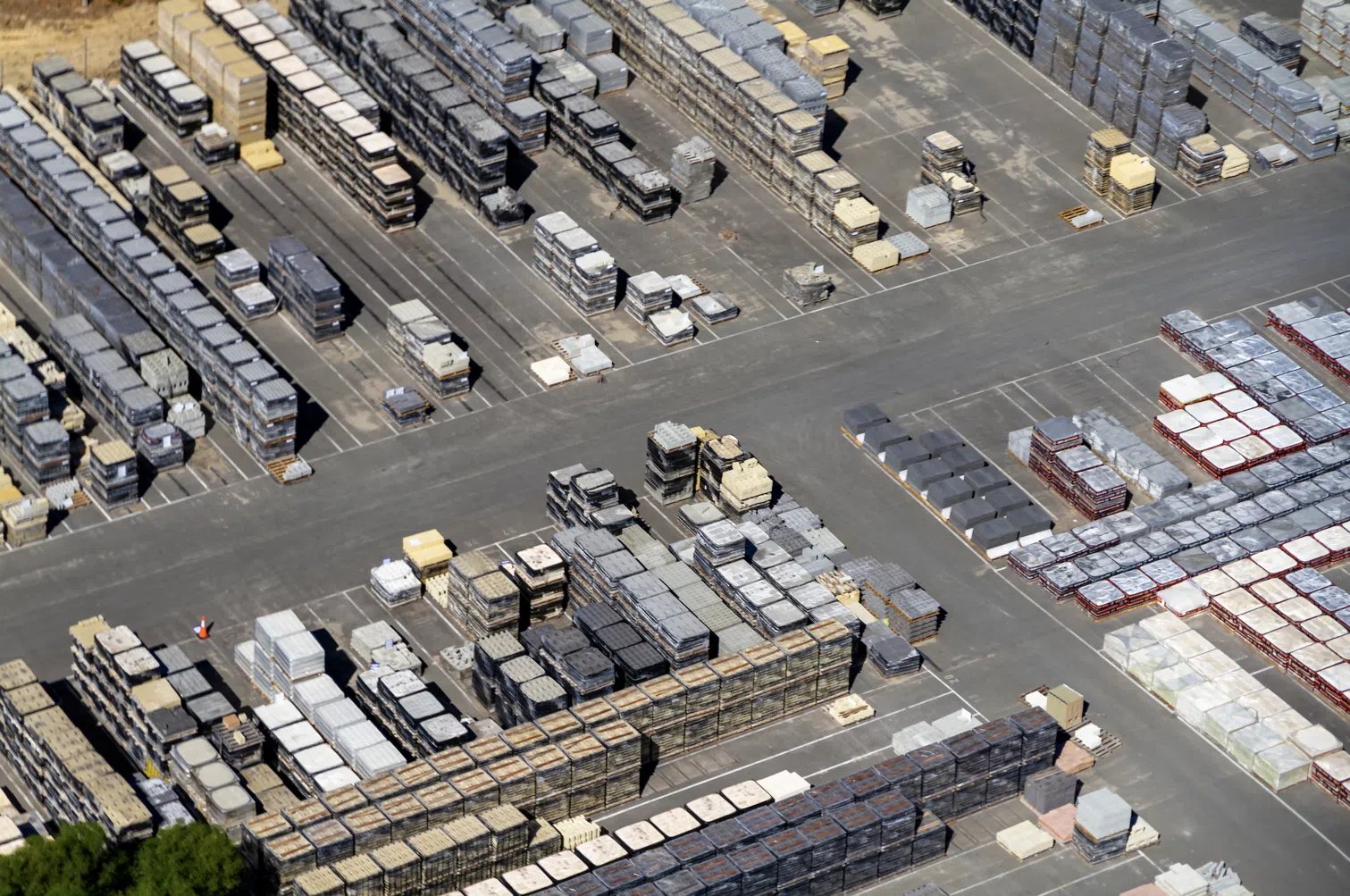
Projected peak construction at the Sentinel modernization on F.E. Warren Air Force Base is 3,000 to 5,000 workers, and the data center campus going up on the south side of town expects more than 1,000 skilled trades at its peak. Every one of those crews needs a place to park, receive steel and rebar, and set down a 90-ton crane. That place is a laydown yard, and in Laramie County it has to be built before anything else is.
We build stabilized laydown yards for plant owners, logistics and distribution developers and the general contractors working for them. The yard is not a gravel field with a gate. It is a graded, drained, compacted pad with a defined haul route, a wash-down or track-out strip, power for trailers, and a perimeter that keeps the neighbors and the wind-blown dust under control. At 6,086 feet, the spring thaw and the 36 inch frost depth in the county design table decide how fast it can be done.
The yard also outlives the build. When you finish the building, a well-made laydown pad becomes overflow trailer parking, a future building pad or an outdoor storage lot. We lay it out with that second life in mind, which keeps you from paying to tear it up later.
What goes into a laydown pad
Scope starts with stripping topsoil and finding the real subgrade. Much of the ground around Cheyenne is fine-grained prairie soil that loses strength when it is wet and heaves when it freezes, so we proof-roll the stripped surface, fix soft spots, and then build the pad on a geotextile separator with compacted structural base. Typical section depth depends on the heaviest load, whether a crawler crane, a module hauler or a pile of rebar bundles. We size it to that load rather than to a standard drawing.
Around the pad we cut perimeter swales, tie it to the haul roads that feed the site, set culverts at the entrance, and add a stabilized construction entrance so loaded trucks do not drag mud onto the public road. Fencing, a gate with a lockable receiving bay, temporary lighting, and a stub of power and water for office trailers complete the package. If the campus has several contractors, we can zone the yard into separate lots with their own access, so one trade's deliveries do not block another's.
How we sequence the first thirty days
Laydown comes first on the schedule, and it usually has no design set behind it yet. We start by walking the site with your superintendent, mark the crane pick radii, the delivery lanes and the trailer zones, and then lock the haul route before we move a yard of dirt. The aim is a single clockwise flow: trucks enter, unload, and leave without backing across a live work area.
We grade to drain from day one. Water standing on an unfinished pad is the common reason yards fail in March, so the swales and the outfall are the first things cut, and the base goes down only after the drainage works. When the mass grading package is ours too, we blend the two so the borrow and cut balance, and the stripped topsoil is stockpiled in the berm that doubles as the dust screen on the windward side.
Calendar: thaw, wind and early starts
Cheyenne can sit under frozen ground into April and then take a week of wet snow. Our practice is to get the pad base placed in the fall for any project that breaks ground the following spring. A compacted, sealed pad that survives winter is ready the day your first load arrives. A pad started in the thaw is not.
Where the building start cannot wait, we use frost blankets, lime or cement stabilization of the subgrade, and tight daily compaction testing. Wind matters too. Dry prairie wind lifts dust off a freshly graded surface within hours, so we schedule water trucks and apply a dust palliative before the first heavy haul day. For a phased campus such as the High Plains Business Park, we build the yard in stages that match the contractor handoffs, so the second phase of staging does not tear up the first phase of finished roadway.
What moves a laydown yard price
Three items drive the number: pad area, section depth, and haul distance for aggregate. Depth is the swing item. A yard that only holds pickup trucks and conex boxes needs a thin section. A yard carrying outsized equipment on rubber or tracks needs a thick one, and you pay for every extra inch across the whole area. We give you two or three options priced against the actual loads.
Utilities are the second driver. Temporary power for trailers, fiber for a site office and a water tap all cost more when they are run late. We stub them during the pad work when the trench is already open, often as part of the underground electrical run. A stabilized pad also saves money downstream: fewer stuck trucks, less rutting, and a surface that can be paved or built on without removal. On a data center campus with hundreds of deliveries a week, that matters.
Traffic control and site safety on a staging yard
A laydown yard puts pedestrians, flatbeds and cranes within a few feet of each other. We mark one-way lanes, pedestrian walkways, spotter zones and no-go areas with physical barrier, not paint alone, and place the stabilized entrance so that drivers see the gate before they see the turn. Night work gets temporary lighting at the pad, not just at the gate.
Environmental controls follow the same logic. Stormwater runs through the perimeter swales and a detention basin before it leaves the property, concrete washout has its own lined basin, and fuel and equipment fluids get a contained spot. If your campus work is under a Laramie County permit, these items show up on the plan, and we build them as drawn, then keep them maintained after rain and after snowmelt.
Tell us the crane and the delivery count
Send the site plan and the heaviest lift on the list. We will return a pad section, a haul route and a start date that works with your frost window.
Common Questions
How early do you need to start a laydown yard before the building?
Six to eight weeks is a comfortable lead for a mid-sized pad, and longer if the ground is frozen. We would rather place the base in fall and let it sit through winter than rush it in a thaw. If your schedule is tighter, we can stabilize the subgrade with lime or cement and still turn the pad in a few weeks.
Can the yard be reused after construction ends?
Yes, and we design for that. We set the grades, culverts and entrance so the pad converts to overflow parking, outdoor storage or a future building pad without a rebuild. Tell us in advance and we adjust the section depth and the drainage to suit the end use.
What does a laydown yard need for permits in Laramie County?
It depends on size and whether it disturbs more than a threshold area, which triggers stormwater requirements. The county adopted the 2024 International Building Code effective January 1, 2025, and local grading and drainage rules apply on top. We handle the stormwater plan, the entrance permit and any road-use approvals as part of the work.
How do you keep dust and mud off the road?
A stabilized entrance with a rock apron, a shaker or wash strip where the volume justifies it, and a swept apron at the gate. In dry wind we run water trucks and spread a palliative. Rain days get a sweeper pass before the first truck leaves.
Do you build the yard if another contractor runs the project?
Yes. We work for owners, developers and general contractors. We coordinate crane pad locations, delivery lanes and trailer positions with whoever holds the schedule, so the yard fits their sequence.
Related
Related Services
Related Building Types
Related Industries
Related Service Areas
Ready to talk about your project?
Industrial Construction Services
-
Ground-Up Industrial Construction
Ground-up plants and industrial buildings in Cheyenne and Laramie County, built around utilities, slab spec, wind load and a 36 inch frost line. -
Industrial Design-Build
One contract for design and construction of Cheyenne industrial plants, with guaranteed pricing, early utility release and closely managed site work. -
Industrial Preconstruction Services
Site feasibility, utility review, estimating and scheduling for Cheyenne industrial projects, priced on real quantities before design is frozen.