
Stormwater Detention and Drainage in Cheyenne
Three-inch hail fell southwest of Burns on August 1, 2025, and about baseball-size stones hit downtown Cheyenne the same day. The ground takes the water that comes with a storm like that, and an industrial site with acres of roof and pavement has to move it somewhere. Detention and drainage on the high plains must handle short, violent rain on dry, hard ground, then do the opposite job in a spring melt.
We design-build the physical side of site drainage: detention basins, outlet structures, storm sewer, inlets, culverts, swales, riprap and the grading that links them. The engineer sets volumes and release rates. We build what the plan shows, test it and make sure it drains when the water arrives.
A basin that fills and does not empty is a liability. A basin that empties too fast can flood a neighbor downstream. The detail work is in the invert elevations, the outlet orifice and the maintenance access, and that is where we spend our attention.
What we build
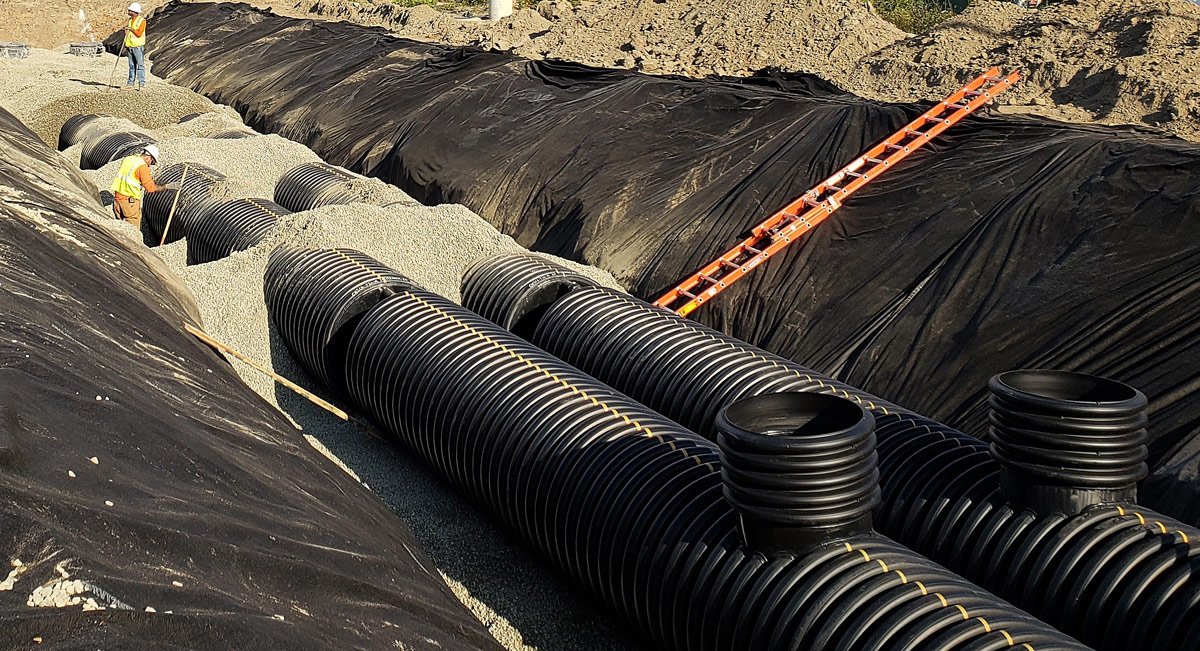
Detention basins, both dry and extended-detention types, are the main feature. We excavate to the design volume, shape side slopes for mowing and stability, install the outlet control structure with its orifice plate, trash rack and emergency spillway, and place riprap at inlets and outlets. Underground detention uses large-diameter pipe or chambers beneath truck courts, which saves surface acres at the cost of more excavation and inspection effort.
Conveyance comes next: storm sewer, curb inlets, trench drains at dock aprons, cross-pan swales and culverts at road crossings. At dock aprons and loading zones, drainage keeps water from pooling at levelers and freezing into ice sheets in winter. The slopes are small, usually one to two percent, and tolerances matter. A half-inch error over a 12 foot panel is the difference between a dry door and a puddle.
High plains hydrology
Annual precipitation in the area is modest. Pine Bluffs, for example, averages 15.59 inches a year. The risk comes from intensity. A thunderstorm can deliver inches in a few hours over frozen or crusted ground, so runoff is quick and peaks are high. The 1985 flood, with 6.06 inches in 24 hours, is the local benchmark in the minds of reviewers and neighbors.
Winter adds its own hazards. Snow piles melt onto paved areas and refreeze at night, so we slope away from entrances and plan for snow storage out of drainage paths. Outlet structures must work with ice. Orifices are sized to avoid clogging, pipes are bedded below frost depth where possible, and trash racks are accessible in cold weather.
Design criteria and approvals
Wyoming has no single statewide building code, so drainage review runs through local authorities: the city or county engineer and, for larger disturbed areas, state stormwater permitting. Laramie County's published design criteria list 105 mph wind and 36 inch frost depth, which apply to structures, but drainage design follows the engineer's hydrology study and the local drainage manual. We ask for the manual and the release-rate rules at the pre-application meeting.
During construction, we maintain the stormwater pollution prevention plan: inlet protection, silt fence, concrete washout, vehicle tracking control and routine inspection. The permitting coordination team files the notices and keeps the paperwork current for inspectors.
What we manage in the field
We schedule and supervise excavation, pipe, structures, riprap and final grading. Our trade partners set pipe with laser and check inverts against the plan after each run. Cast-in-place outlet structures are formed, reinforced and poured by our concrete trade partner. We backfill in lifts, test density, and inspect joints before covering.
Water testing is part of closeout. We fill basins to the overflow, check that the outlet drains as designed, and confirm that pipes flow free. Where a plan includes underground chambers, we run cameras through the system and document the result. A truck court over a detention chamber must carry wheel loads for decades, so cover depth and backfill matter.
Where drainage falls in the sequence
Drainage goes in early. Basins are cut during mass grading, because they supply fill and double as sediment traps during construction. The storm sewer trenches open once the pad is rough graded and before footings, so the building does not sit over a pipe that has not been tested. Outlet structures are poured early enough to cure before the first big storm.
Final grading and landscape stabilization come last. A basin finished in September needs seed and erosion blankets in time to establish before freeze, otherwise the slopes erode in the first spring melt. We schedule that work with the seasonal window in mind and plan temporary stabilization when a basin is finished too late for seed.
Water supply and reuse
Stormwater is one side of a plant's water story. The other is supply. A hyperscale campus in the High Plains Business Park agreed to use no more water than a standard business with 100 employees and plans a closed cooling system, and Cheyenne officials have raised water supply as a key question for other proposed large users. Plants that want to limit demand sometimes reuse stormwater for irrigation or process makeup, and we build the cisterns and piping.
The same thinking applies to flex and light industrial buildings, where small roofs and lots still generate runoff. A handful of well-placed swales can keep a small site compliant without a large basin. Operators in ecommerce fulfillment, with big roofs and big trailer yards, usually need a basin and an underground system working together.
Move the water before you pour
Send the drainage report and the site plan. We will price the basin, the pipe and the outlets.
Common Questions
How big does a detention basin need to be?
The engineer sizes it from the hydrology study, the site's impervious area and the allowed release rate. Rules of thumb are unreliable. We can give an early budget once we know the acreage and the percentage of paving and roof.
Can detention go under the truck court?
Yes. Underground pipe or chambers save land, and they carry traffic when cover depth is right. They cost more than an open basin and need access for inspection and cleaning.
What maintenance does a basin need?
Periodic sediment removal, mowing, outlet inspection and clearing debris from the trash rack. We provide a maintenance plan with photos of the as-built structure.
How do you handle ice at outlets in winter?
With oversized orifices, protected openings and gravel or riprap at the discharge point. We design for flow to continue at low temperatures where possible.
Does hail affect drainage design?
Indirectly. Hail clogs inlets and can pile at low points, so we build inlets with overflow paths and keep trash racks accessible. The roof drainage on large buildings also needs generous overflow capacity.
Related
Related Services
Related Building Types
Related Industries
Ready to talk about your project?
Industrial Construction Services
-
Ground-Up Industrial Construction
Ground-up plants and industrial buildings in Cheyenne and Laramie County, built around utilities, slab spec, wind load and a 36 inch frost line. -
Industrial Design-Build
One contract for design and construction of Cheyenne industrial plants, with guaranteed pricing, early utility release and closely managed site work. -
Industrial Preconstruction Services
Site feasibility, utility review, estimating and scheduling for Cheyenne industrial projects, priced on real quantities before design is frozen.