
Automotive and Fleet Facilities in Cheyenne, Wyoming
Seventeen percent of the crashes at the I-25 and I-80 interchange involve heavy trucks, against about 4 percent at other interchanges nationally, and the interchange has logged 160 collisions from 2018 on. Those figures describe the traffic a Cheyenne fleet moves through every day, and they explain why owners here keep their own maintenance, wash and fueling capacity rather than depend on shops far away.
We build the facilities that keep fleets and vehicles running: maintenance garages with heavy-duty bays, wash bays and recycle systems, fueling and DEF areas, tire shops, parts rooms, driver and dispatch space, truck and bus parking, and EV charging infrastructure. We also build dealer-style service buildings and body shops for auto and light truck work, along the lines of the maintenance shops and service bays we deliver for other owners.
Cheyenne is a crossroads of I-25, I-80, US 30, US 85 and US 87, with Union Pacific and BNSF both running through town. A fleet based here covers a lot of ground, and the buildings that support it have to take weather, salt, snow and heavy axle loads. Our designs begin with the yard, because for a fleet the yard is the operation and the building is a part of it. Terminal operators will recognize the logic from truck terminal and cross-dock layouts, where flow decides everything.
The buildings and yard on a fleet campus
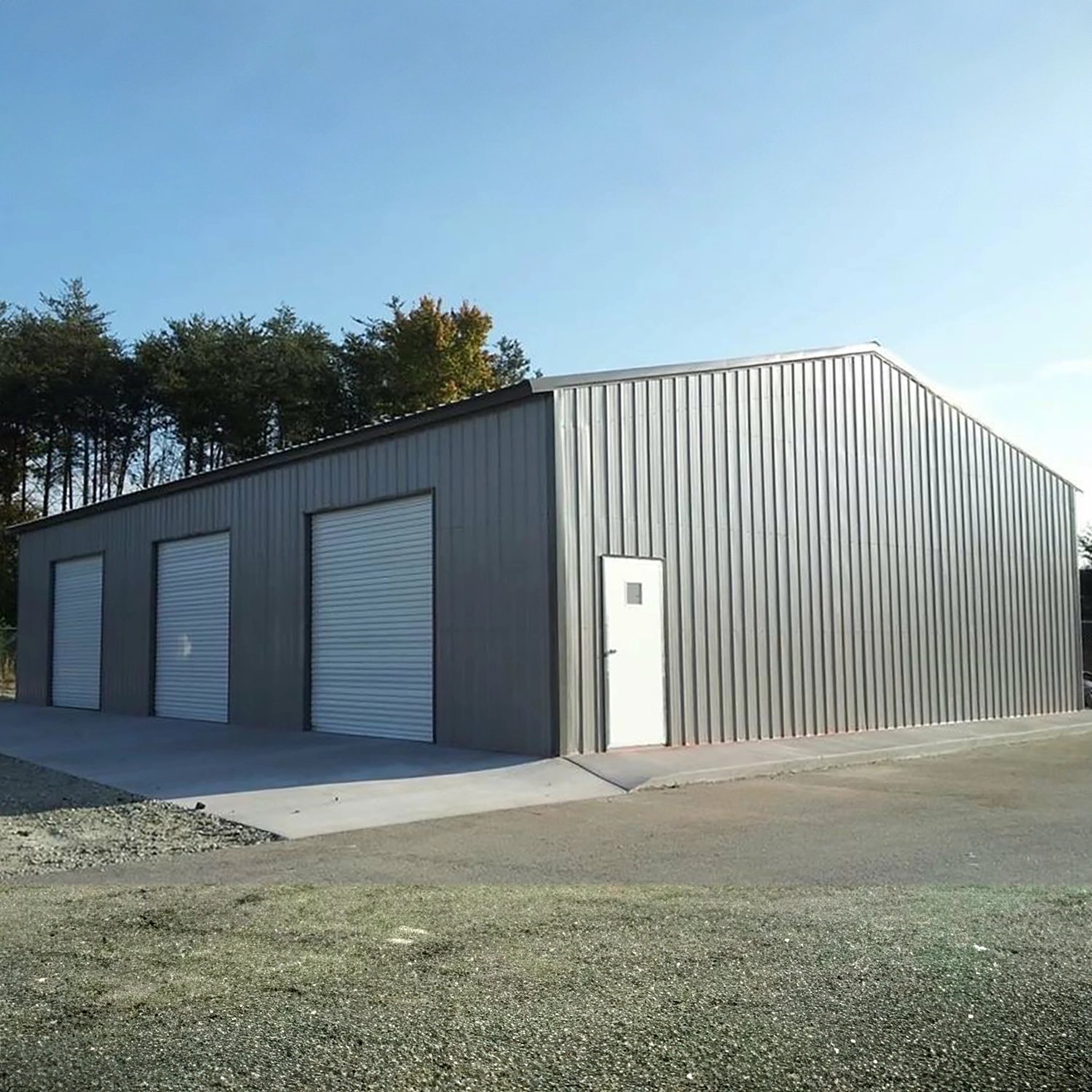
A typical campus includes a maintenance building with drive-through bays, a wash building, a fuel island with canopy, a parts and tire room, a small office wing, secured parking, and a fenced yard. Bays are sized to the longest vehicle, with clearance for lifts and overhead equipment, and doors rated for wind. Floors are reinforced and sloped to trench drains that feed oil and sand separators.
Utilities and systems form the second half: compressed air, exhaust capture, radiant slab heat, lighting designed for inspection work, and electrical service for lifts and chargers. For truck courts and trailer yards we design the paving to the turning radii and axle loads of your fleet. Loading and staging use the same dock aprons and loading zones thinking as a distribution site. The campus is laid out for one-way flow so vehicles do not back across fueling and wash areas.
Corridors and sites for fleet operations
The I-25 and I-80 interchange is the pinch point. WYDOT's estimate for replacing the 1960s cloverleaf with a partial cloverleaf and flyover bridges rose to about $500 million, with design possibly running to 2027 and at least six years of phased construction. Fleet sites near it should plan for detours, lane closures and changing access over the next decade.
Closer to town, WYDOT's Cheyenne Streets Project rebuilds Dell Range Boulevard on a new alignment east of Whitney Road starting June 15, 2026, with new signals and a south frontage road. Another approach is the Campstool Business Park at I-80 exit 367, where annexed, platted land is zoned for community business. We compare sites for turn access, truck routes and expansion room before a design is set.
What we manage most closely
For owners in automotive and EV supply chains and for municipal and private fleets alike, our trade partners pour the heavy slabs: reinforced bay floors, wash-bay slabs with sloped drainage, fuel-island pads and concrete aprons. Concrete holds up better than asphalt under heavy turning loads and fuel spills, so we use it at fueling, wash and bay entrances, with asphalt in lower-impact areas. We also place the trenches, sumps and separators that keep the yard clean.
We erect the buildings too: steel or metal-building frames, insulated panels, and overhead doors. For owners with smaller programs, a pre-engineered metal building often fits. Electrical, mechanical and fueling systems are handled by licensed partners under our schedule, so you deal with one builder for the site.
Keeping the fleet moving during construction
A fleet cannot park its trucks for six months. We phase the work so that existing bays, yards and fueling stay in service where possible. New work starts at the edge of the site, vehicles move once into the finished space, and the old building is then renovated or demolished. Where utilities must cross a live yard, we trench in short sections and plate them for traffic.
Winter drives the order of work. Concrete for bay floors and aprons goes in during warm months or under enclosure, and underground drainage is installed before the ground freezes. Fueling work follows state and local requirements for tank installation and testing. We schedule inspection windows ahead so a failed test does not idle the whole project.
Cost items on fleet projects
The big lines are slab and pavement thickness, drainage and separators, the number of bays and their equipment, and electrical service. EV charging adds a significant electrical load, and the utility service, switchgear and trenching often cost more than the chargers themselves. We plan the electrical backbone for the number of chargers you will have in several years, not only this year, so conduit and transformer space are not an expansion headache.
Weather exposure adds smaller costs that pay back. Insulated doors, radiant floors in the bays and wind-rated door hardware reduce energy and repair costs. Snow storage areas, plow routes and drift fences keep the yard usable in storms. We include these in the base scope when they are needed and flag them as options when they are not.
Send the fleet list
Tell us vehicle types, counts and turning needs. We will return a yard and building plan with a phased schedule.
Common Questions
How many bays does a fleet shop need?
It depends on fleet size, vehicle type and maintenance model. We look at service hours per vehicle, repair mix and shift pattern, then size the bays and the yard. We also leave room for one more bay so growth does not mean rebuilding.
Can you add EV charging to an existing yard?
Yes. The limiting factor is usually electrical service. We study the utility capacity, trench from the transformer, install conduit for more chargers than you need today, and pour pads and bollards. Early planning of the electrical backbone is the cheapest part.
Concrete or asphalt for the yard?
Concrete at fueling, wash and bay entrances, and asphalt for general parking, is a common split. Concrete costs more up front but lasts under fuel and heavy turns. We give you a side-by-side life-cycle comparison when the choice is open.
What permits does a fleet facility need?
Building, electrical, plumbing and fire permits, plus fuel storage and stormwater review. Laramie County adopted the 2024 International Codes effective January 1, 2025, and local review sets the details. Oil and sand separators and spill containment are central to the plan.
How do you handle snow and ice?
We design the yard to drain away from doors and fueling, provide snow storage, and use heated slabs at critical door thresholds. Bay doors are insulated and wind-rated. The county's 32 lb/ft2 ground snow load also governs roofs on larger buildings.
Related
Related Services
Related Building Types
Related Industries
Related Service Areas
Ready to talk about your project?
Industrial Construction Services
-
Ground-Up Industrial Construction
Ground-up plants and industrial buildings in Cheyenne and Laramie County, built around utilities, slab spec, wind load and a 36 inch frost line. -
Industrial Design-Build
One contract for design and construction of Cheyenne industrial plants, with guaranteed pricing, early utility release and closely managed site work. -
Industrial Preconstruction Services
Site feasibility, utility review, estimating and scheduling for Cheyenne industrial projects, priced on real quantities before design is frozen.