
Truck, Rail and Shop Buildings at Pine Bluffs on the East End of I-80
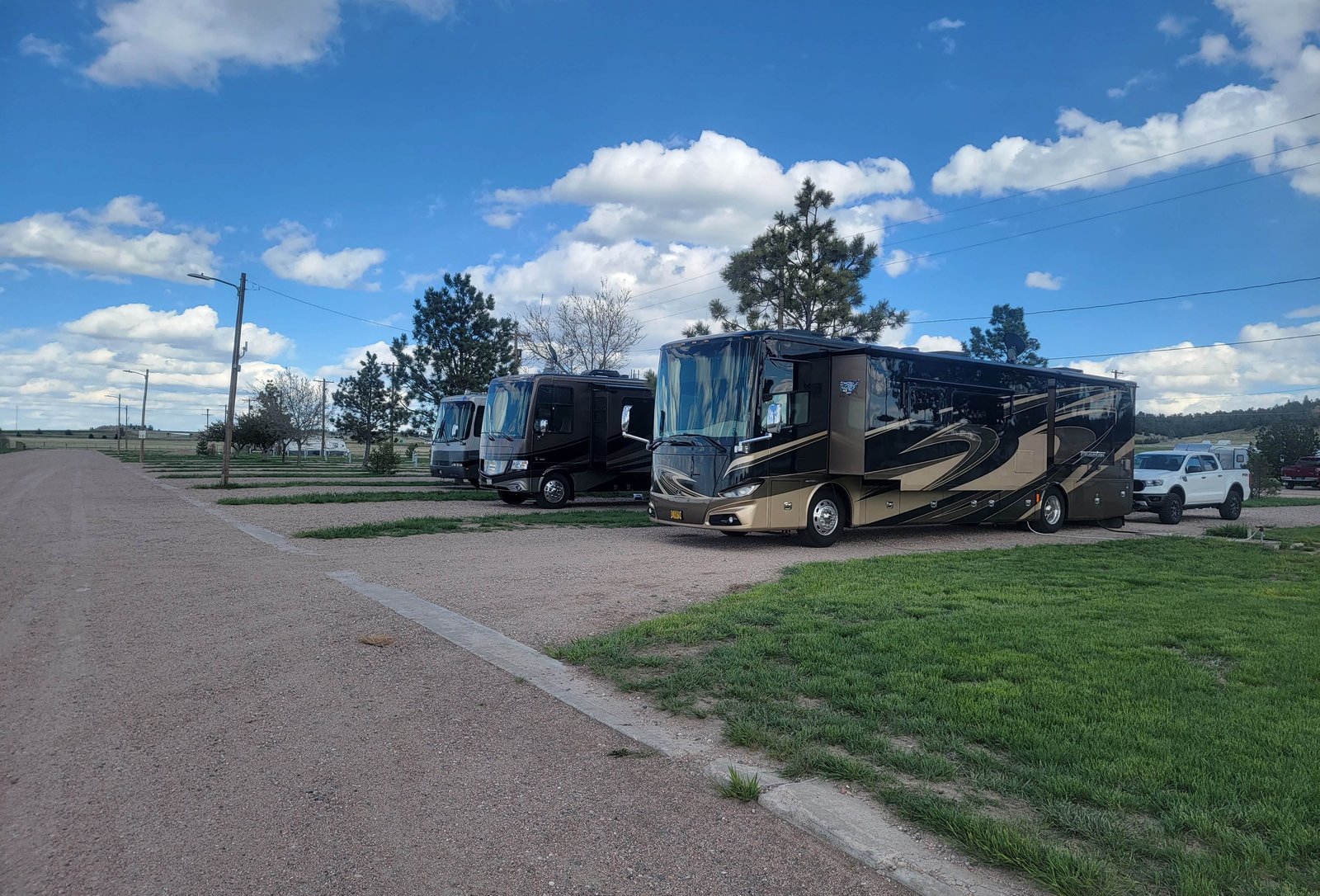
Exit 401 sits a few miles short of the state line at milepost 402.78, and the freight that passes it has no reason to stop unless a site gives it one. We build those reasons: truck courts with heavy-duty pavement, transload and cross-dock buildings, metal-building shops and rail-side yards. Pine Bluffs is about 42 miles east of Cheyenne on I-80 at 5,049 feet, and a contractor who mobilizes that far has to arrive with the plan, the equipment and the weather margin in place.
The interstate is one asset. The Union Pacific Railroad arrived at Pine Bluffs in 1868 as part of the first transcontinental railroad, and the town began as a cattle shipping station, so rail adjacency here is not a theory. Exit 401 serves the town via US 30 east to WYO 215, and Business Loop I-80 follows Parsons Street and the Lincoln Highway through it. For an owner weighing an east-end parcel, that puts highway, rail and a town street network in one place. Our rail spur site improvements are the starting point for rail-served industrial use.
Mobilizing 42 miles out
Pine Bluffs is the east end of our metro territory, and we treat distance as a cost to engineer. Crews, fuel, small tools and forms are staged on site for the duration of a phase, so nobody drives back for a forgotten part. Material orders are consolidated into scheduled deliveries. When the job warrants it, we bring a field office and a laydown yard that stays put.
Egbert at exit 391 and Burns at exit 386 lie to the west on the same interstate, and we cover them from the same crews. An owner with parcels at two of those exits can often share mobilization, which lowers the cost per site. Pine Bluffs is also where Laramie County Community College runs an outreach center, which gives owners a local point of contact when they ask about training for operators and technicians.
Plan for the cold before the drawings
The record low at Pine Bluffs is 38 degrees below zero, and average annual precipitation is 15.59 inches, which makes this a semi-arid, cold-plains climate. We plan around both. Fresh concrete is protected with insulated blankets or heated enclosures, subgrades are kept from freezing before a pour, and winter shutdown dates are written into the baseline schedule with the owner. A job that tries to ignore January will lose it.
Dryness brings its own problems. Dust control on grading, haul roads and stockpiles is a permit and neighbor issue, and we run water trucks and stabilize disturbed ground early. Paved yards, including truck courts and trailer yards, are built on a prepared subgrade with an engineered section for turning loads, because the first winter of freeze and thaw shows every shortcut in a base course.
Local adoption and highway access
The International Code Council notes Wyoming has no single statewide building code, so the town and the county each govern what they have adopted. Laramie County adopted the 2024 International Building Code with amendments effective January 1, 2025, and the 2024 International Fire Code effective April 15, 2025. For a parcel within town limits, we confirm directly with the town which edition applies before design is fixed. Our permitting and entitlements coordination handles that early.
Highway access is its own review. Any new driveway, turn lane or change to an approach near the exit involves the state transportation department, and approvals take time. We map the access question first, since a building cannot operate without a legal truck entrance. With the state line so close to exit 401, we also check how far the parcel is from the ramps before we promise a truck route.
Who builds on the east end
Three kinds of user make sense out here. First, freight operators, who want fuel, parking and a service bay near the state line; see our work in logistics and distribution. Second, agricultural and processing users, who need storage, scale pads and truck routes. Third, small manufacturers or fabricators priced out of larger markets, who need a clear-span shop and three-phase power.
Each of these wants the same early facts: the power available at the site, whether water and sewer are on the town system or need on-site solutions, and how trucks will turn. We scope those first and fit the building to them. A truck terminal or cross-dock on a generous lot has a very different plan from one squeezed between a town street and the rail line.
Hail season and the build calendar
A severe July 2016 hailstorm in Pine Bluffs brought in the Wyoming National Guard. That is the benchmark for exposure. We schedule roofing and envelope work to get the building dried in as early as possible, favor hail-resistant roof assemblies where the owner will hold the building long term, and keep unfinished work covered or stored under cover in storm season.
Structural steel and metal building shells suit a short window. A pre-engineered metal building goes up quickly once the slab is cured, which helps when the weather gives you a limited season. We work backward from the date the owner needs to move in, and lock steel and door orders early enough to meet it.
Services that follow the first building
The first structure is rarely the last. Owners who start with a shop or a yard often add a second bay, a canopy, a wash, fencing or a fuel island within a few seasons. Planning the site for expansion costs little at the start and a lot afterward. We lay out utilities, drainage and truck circulation for the full build-out and construct the first phase to fit.
A warehouse or storage building is the usual second step, and our warehouse shell construction follows the same coordinated concrete schedule. Owners who want to compare east-end sites with a more built-up freight address can look at the I-25 and I-80 interchange, where the corridor traffic and the services are different.
Send the parcel, the truck count and the winter plan
We will return a mobilization plan, an access and utility checklist and a budget for the first phase at exit 401.
Common Questions
Is it practical to build an industrial facility this far from Cheyenne?
Yes, and the interstate and rail access are the reasons to do it. The extra distance adds mobilization cost, which we reduce with on-site staging, consolidated deliveries and a crew that stays through a phase. Owners with several east-end parcels can share mobilization across sites.
What does a 38 degree below zero record low mean for foundations?
Frost depth sets footing depth, and Laramie County lists a 36 inch frost line in its published design table. The extreme cold matters more for construction methods: concrete needs protection, and some finishes cannot be installed below a minimum temperature. We plan the schedule around those limits.
Can we get rail service to a new site near town?
Possibly. It depends on where the site sits relative to existing track, the railroad's willingness to serve it and the cost of a switch and spur. We can prepare a conceptual layout and a budget for the on-site work, and you would approach the railroad for its own requirements.
How do you handle hail risk on a new building?
We select roof and wall assemblies with impact resistance appropriate to the building, schedule the dry-in early and protect materials in storage. Your insurer may also have requirements for roof ratings, so we ask for them before design is final.
Related
Related Services
Related Building Types
Related Industries
Related Service Areas
Ready to talk about your project?
Service Areas
-
Cheyenne
Ground-up plants, data center support, slabs, pads and site civil for Cheyenne owners. We build to local frost, wind and snow criteria. -
Laramie
Light manufacturing, flex and metal buildings in Laramie at 7,165 ft. We plan frost, wind and long hauls into every pour and erection date. -
Wheatland
Equipment pads, heavy-haul roads and phased work beside an operating plant in Wheatland, Wyoming. We plan around outages and I-25 hauls.