Industrial Contractor in the Hitching Post District
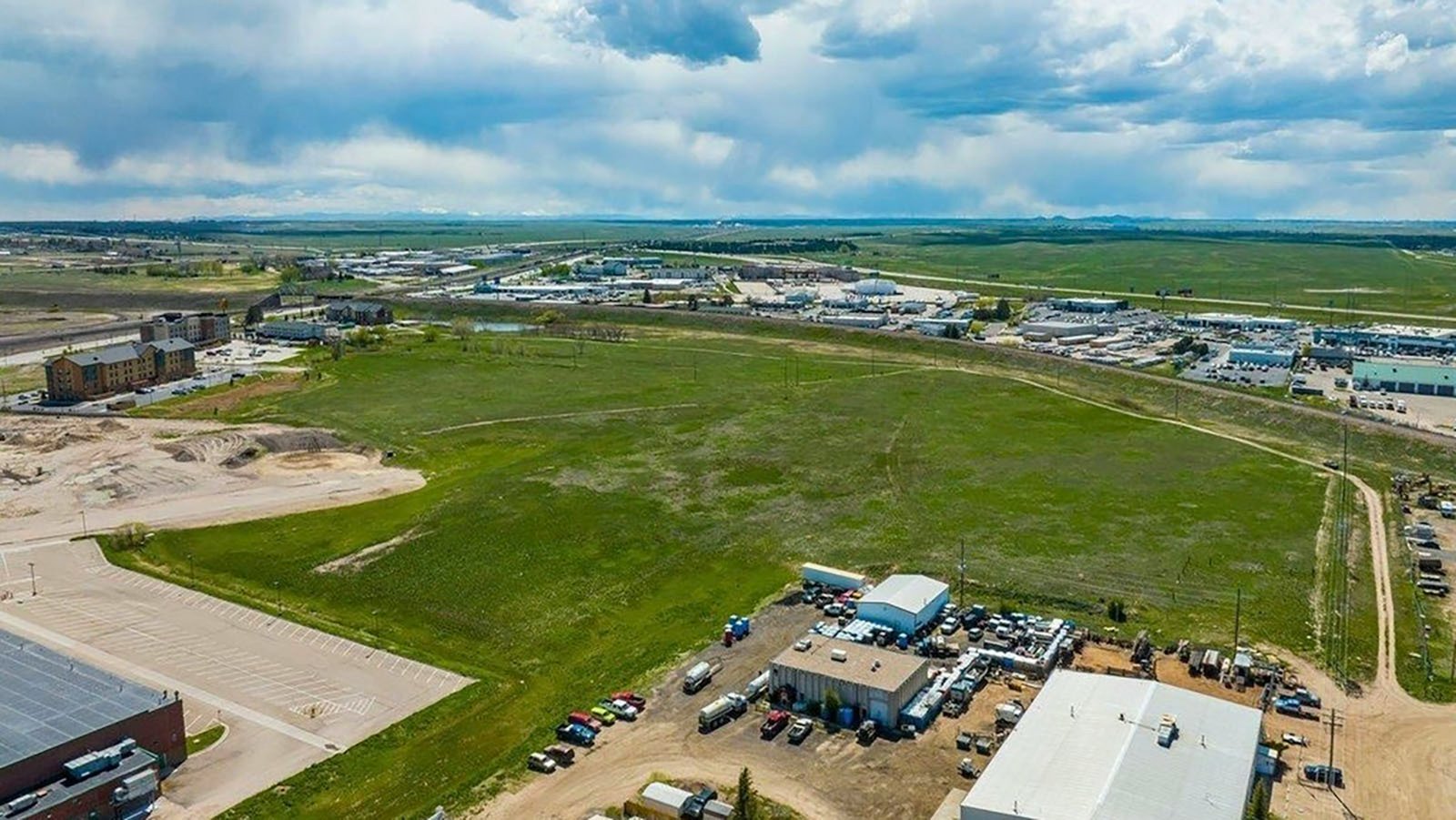
Redevelopment at the Hitching Post District started with a condemned property, asbestos abatement and about two months of demolition, which is the kind of start we plan for. The district lies near the I-25 and I-80 intersection on Western Heritage Way, and the city markets it as a planned year-round hub. The old inn on the site dated to 1927, was sold in 2006, suffered several fires and was condemned by the city in early 2021.
In September 2021 the city, a local bank and a general contractor announced an 80-acre development with a hotel, restaurants, retail and a residential area. It was financed in part through a Tax Increment Financing district. The banker at the announcement estimated a $40 to $50 million economic impact, and a hotel was already under construction on a former motel site inside the TIF boundary.
Our role on a site like this is the part buyers rarely see: clearing, abatement coordination, slab removal, utilities and the pads that make a building possible. The sections below describe how we sequence that work, how public financing changes documentation and how we keep an interstate-adjacent site moving through a hard winter.
Abatement, demolition and the first sixty days
Asbestos has to be identified, abated and cleared before demolition begins. We work with licensed abatement firms and require clearance documentation before machines move in. Fire-damaged structures add instability, so we assess before we enter, shore where needed and demolish in a planned sequence from the top down.
Dust, debris and noise need active control next to a busy interchange. We wet down work areas, wash truck tires at the exit and barricade the perimeter to protect traffic on Western Heritage Way. Our industrial demolition services follow a written plan that covers each structure, each hazard and each hauling route.
A corridor between two interstates
The district sits close to where I-25 and I-80 meet, so it gets traffic from local, regional and freight flows. That makes it attractive to hotels, restaurants and retail, and it creates pressure on the access roads. Building next to a busy interchange demands careful traffic management during construction and thoughtful driveway design afterward.
Owners considering the district should also look at the neighbors on both sides of the interchange. The I-25 and I-80 interchange is the hinge of local freight, and the downtown depot district is the main alternative for walkable commercial work. Industrial buyers who need a nearby support facility, such as a laydown yard or a contractor base, can benefit from the same access.
Site prep, utilities and pads
After demolition, the site needs grading, compaction and utilities before any building starts. We remove old slabs and footings, trace old utility lines and cap or reroute them, then bring the ground to a stable subgrade. Where fill is needed, we place it in lifts, test density and document the results for the engineer.
Utilities follow the grade. Water, sewer, storm and electrical lines run to each pad, with conduits sleeved under roads before paving. Our site clearing and mass grading and site utilities packages carry the work from raw ground to building-ready pads. Hotels and restaurants need different utility sizes, so we confirm each tenant's demand early.
Building through a Cheyenne winter
An 80-acre redevelopment runs across several seasons. We sequence demolition, grading and utilities in the dry months, so footings and slab work can follow before frost. Cheyenne's 36 inch frost line means exposed subgrade must be protected, and any trench left open overnight in cold weather needs a plan.
Pads and drives are often built in phases, keeping the first building open while the next is under construction. We use temporary roads, fencing and signage so the public never faces a muddy lot or an open trench. Phased construction on occupied sites is a core method for us in these cases.
Public financing and cost control
A TIF district pays for qualified public improvements from future tax revenue, and it requires careful documentation. Owners should expect to track costs by category, keep lien waivers current and provide records for reimbursement or reporting. We organize pay applications and change orders so they can be tied back to the improvements that were financed.
On the cost side, demolition of a fire-damaged property can surprise owners. Hazardous materials, buried foundations and unknown utilities each add dollars, and we hold a contingency specifically for them. Our demolition and slab replacement estimates separate abatement, tear-down, hauling and disposal so you can see where money goes.
What else the district needs
Beyond the first buildings, a hub like this needs site concrete, parking and lighting. We build sidewalks, ramps and curbs to accessibility standards, and our stabilized parking lots carry heavy delivery trucks as well as cars. Yard lighting and fencing complete the sites that need security.
Industrial support also matters. Hotels and restaurants generate trash enclosures, service courts and loading zones, and their trucks are heavier than most people think. We design those areas for real wheel loads so pavement does not fail early. Owners from the logistics and distribution trade often look at the district for office or truck service space.
Redeveloping a tired site near the interchange?
Send us the parcel, the history and the target use. We will plan abatement, demolition, utilities and pads in an order that keeps the project moving through the season.
Common Questions
How long does demolition take at a condemned property?
The 2021 plan for the Hitching Post site expected abatement and demolition to take about two months. Actual time depends on the amount of asbestos, the condition of the structures and the disposal route. We build in extra days for unknown conditions and keep the schedule updated weekly.
What happens if we find buried tanks or old foundations?
We stop, document and bring in the engineer and the owner. Buried tanks need testing and removal under state rules, and old foundations are broken out and hauled. We carry a contingency for these discoveries, and we price them as unit costs where possible.
How does a TIF district affect construction?
It adds documentation. Public improvements financed by the district must be tracked, certified and reported. We keep clean records and tie each pay application to the eligible work, so you can submit for reimbursement without delay.
Can we phase development across the 80 acres?
Yes. The district is large enough to support phased pads, and phased construction lets early buildings open while later ones go up. We lay out the utility trunk lines and road grades for the whole site first, then build in sections. That avoids tearing out finished work.
What do you do about interstate traffic noise and dust?
We control dust with water and sweeping, set work hours with the city, and use barricades and signage along Western Heritage Way. Truck routes are planned to avoid peak periods near the interchange. Neighbors get advance notice of major activities.
Related
Related Services
Related Industries
Related Service Areas
Ready to talk about your project?
Service Areas
-
Cheyenne
Ground-up plants, data center support, slabs, pads and site civil for Cheyenne owners. We build to local frost, wind and snow criteria. -
Laramie
Light manufacturing, flex and metal buildings in Laramie at 7,165 ft. We plan frost, wind and long hauls into every pour and erection date. -
Wheatland
Equipment pads, heavy-haul roads and phased work beside an operating plant in Wheatland, Wyoming. We plan around outages and I-25 hauls.