
Fencing and Security Integration for Cheyenne Facilities
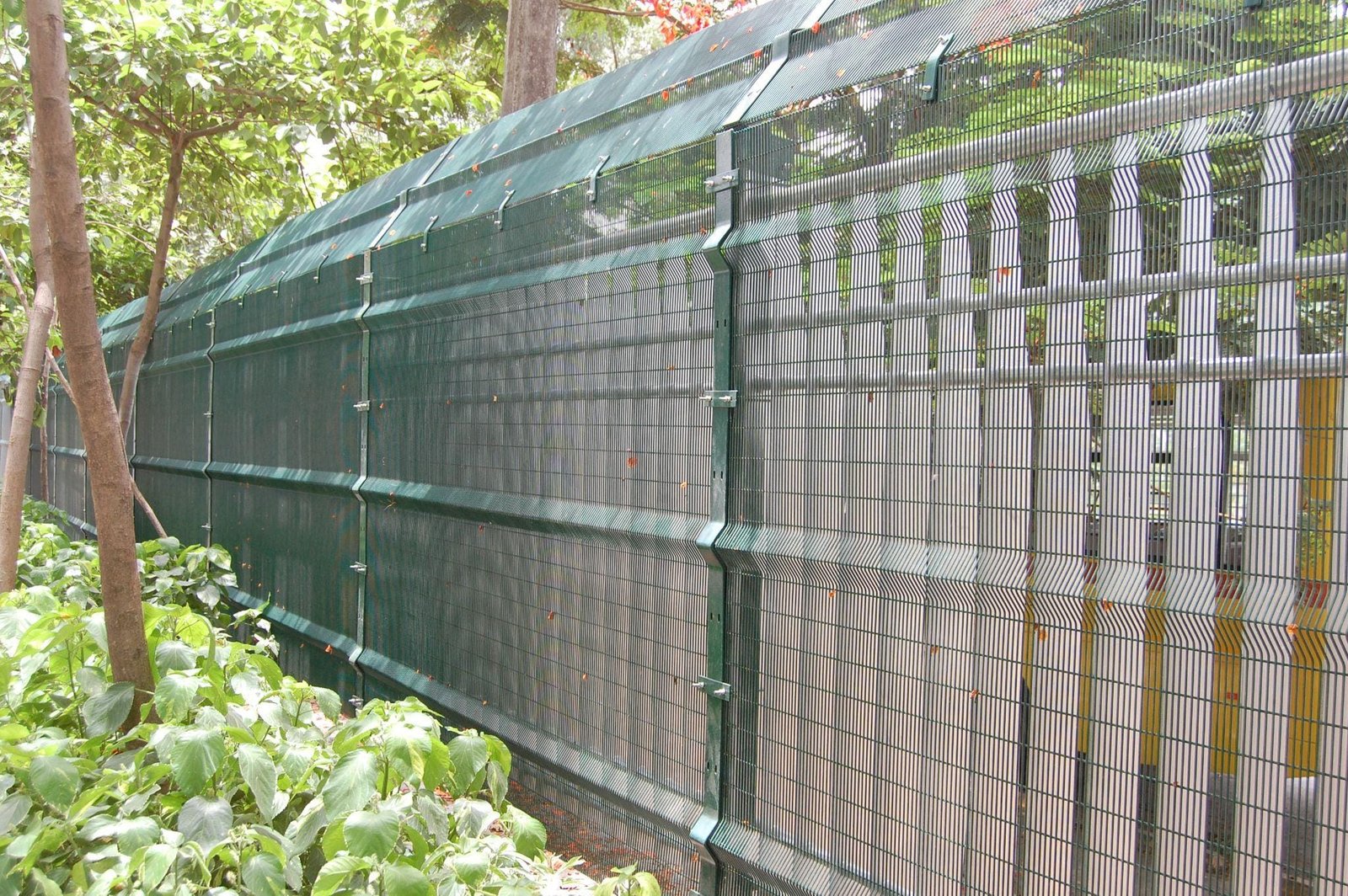
Cheyenne's neighbors include an Air Force missile wing, an Air National Guard base at the airport, and a 153,000 square foot supercomputing center in North Range Business Park. Security here is not a gate and a chain-link run. It is a layered perimeter where fencing, gates, bollards, lighting, cameras, conduit and access control have to be built together, in a sequence that works. We install fencing and security systems for industrial and data center owners, and we integrate it with the civil and electrical work around it.
The common mistake is buying fence and security as separate pieces. The fence contractor sets posts before the conduit is in. The camera vendor needs a pole where the footing has already been poured. The gate operator wants power and data at a spot that was never trenched. We run it as one package, with the perimeter laid out once on survey control and every pole, post and pull box placed on that layout.
Our scope ends where your security integrator's begins, and we draw that line on paper before work starts: we build the physical infrastructure, and they commission the head-end, the software and the monitoring.
Who builds secure perimeters here and why
A 26,000 square foot facility for the Sentinel program at F.E. Warren Air Force Base had its ribbon cutting in March 2026, and the program's task force at the base is expected to grow to about 200 people. Peak construction for the modernization is projected at several thousand workers. That kind of work raises the bar for site security across the region, including for the contractors and suppliers who deliver to it.
The I-80 corridor through Cheyenne runs along a major internet backbone, and data center operators care about physical security as much as power. For an owner on airport-adjacent ground or in a data center park, the perimeter is a design requirement, not an upgrade. We have the experience to read a security design package and build to it.
Fence, gate, bollard and conduit
The visible work is the fence line: chain link with privacy slats, welded wire, ornamental steel, or high-security fence with anti-climb mesh and top rails, set on concrete footings below frost. Gates come as swing, cantilever slide or vertical lift, with operators sized for the traffic and the winter. Bollards and vehicle barriers protect gates, buildings, and equipment, and we set them in concrete with proper embedment.
The unseen work matters just as much. We trench conduit and duct bank runs for camera power and data, card readers, intercoms, loop detectors, and fiber, along the fence line and across the drive lanes, with handholes at the pole locations. We pour concrete bases for camera poles and light poles, and we run grounding and surge protection so that a lightning strike or a power transient does not take the system down. Cameras on tall poles in open prairie see real wind, so we size the pole base for the project wind speed and add a service loop and a lowering device where the owner wants to maintain the camera from the ground.
Site safety while the perimeter goes up
Building a fence in an occupied plant is a traffic-control problem as much as a construction one. We phase the work so the perimeter stays closed at night, set temporary fence where a section is open, and use flaggers and a gate attendant when trucks run through. The work is logged and badge-controlled where the owner requires it.
Excavation near buried utilities needs locates and hand-digging at crossings. We pothole before we drill piers and trench along an existing duct bank. Working at height on camera poles and lighting follows a fall-protection plan, and electrical work follows lockout rules. At High Plains, where neighbors raised noise and traffic concerns about the campus, a quiet and tidy perimeter crew also helps the owner's standing with the community.
What we manage most closely
We excavate, form and pour footings and bases, set posts and bollards, trench and install conduit, pull and terminate low-voltage cable where permitted, and backfill and restore the surface. We rely on specialty subcontractors for gate operators, electronic access control, camera systems and monitored alarms, under our schedule and sign-off.
Managing the civil portion closely means we control the quality of the footings, the line and grade of the fence, and the depth of the conduit. On a high-security fence, a post set a few inches out of plumb or a footing too shallow for frost will fail a penetration test or heave in spring. Our trade partners set and survey the line, and we check each footing depth against the 36 inch frost line published in the county's design table plus the added depth the design calls for.
Pieces that ride with the perimeter
Fencing rarely stands alone. The perimeter ties to yard lighting and its power, to the parking lot and entry drive, and to the haul road that brings trucks to the gate. When we build them together, the trench is opened once and the survey is done once.
For multi-tenant parks, we also design shared gates and individual tenant security so that each tenant controls its own area. In a campus with phased construction, a temporary perimeter fence moves with the work and becomes the permanent line when the last phase closes. We plan that conversion at the start so footings are placed once.
Send the security design package
Give us the drawings from your security consultant. We will price the perimeter, flag conflicts with the civil and electrical work, and propose a sequence.
Common Questions
What type of fence suits a data center perimeter?
It depends on the threat model in the security design. Common choices are welded wire or ornamental steel with anti-climb features, sometimes with a second inner fence and a clear zone between. We build to the drawings, and we flag where a detail will be hard to maintain in snow and wind. A fence with a tight mesh collects drifted snow, which loads the posts and buries the clear zone, so we discuss drift patterns before the design is locked.
How deep do the footings go?
Footings must reach below the frost depth, which is 36 inches in the county design table, and often deeper for tall or heavily loaded posts. For gates and barrier posts, the design engineer sets the embedment. We drill, pour and cure each to the drawing.
Can you build the fence and install cameras?
We build the physical infrastructure, including footings, poles, conduit and power. A licensed security integrator usually installs and commissions the cameras and access control. We coordinate so everything lands in the right place.
How do gates cope with Cheyenne winters?
We choose slide or swing gates with operators rated for low temperatures, with heaters and drainage at the track, and we set the gate so snow piled by plows does not block it. Planning for winter at design time is much cheaper than fixing a frozen gate in January.
Do you work in a facility that is already operating?
Yes. We phase the work around shifts, keep the perimeter closed at night, and coordinate with your security staff on badges and escorts.
Related
Related Services
Related Industries
Related Service Areas
Ready to talk about your project?
Industrial Construction Services
-
Ground-Up Industrial Construction
Ground-up plants and industrial buildings in Cheyenne and Laramie County, built around utilities, slab spec, wind load and a 36 inch frost line. -
Industrial Design-Build
One contract for design and construction of Cheyenne industrial plants, with guaranteed pricing, early utility release and closely managed site work. -
Industrial Preconstruction Services
Site feasibility, utility review, estimating and scheduling for Cheyenne industrial projects, priced on real quantities before design is frozen.